Wave of the Future
Picking up immediately where the last chapter ended, Wave of the Future opens aboard a yacht at golden hour — Bond sharing champagne and a loaded conversation with a mysterious dark-haired woman. What follows is the most visually varied mission in the game: underwater swimming, a windswept trek across Antarctic snow and rock, infiltration of a luxury high-tech facility guarded by both humans and something far more unsettling, and a climax that ends with a desperate boat chase through glacial waters.
Sunset on the Water
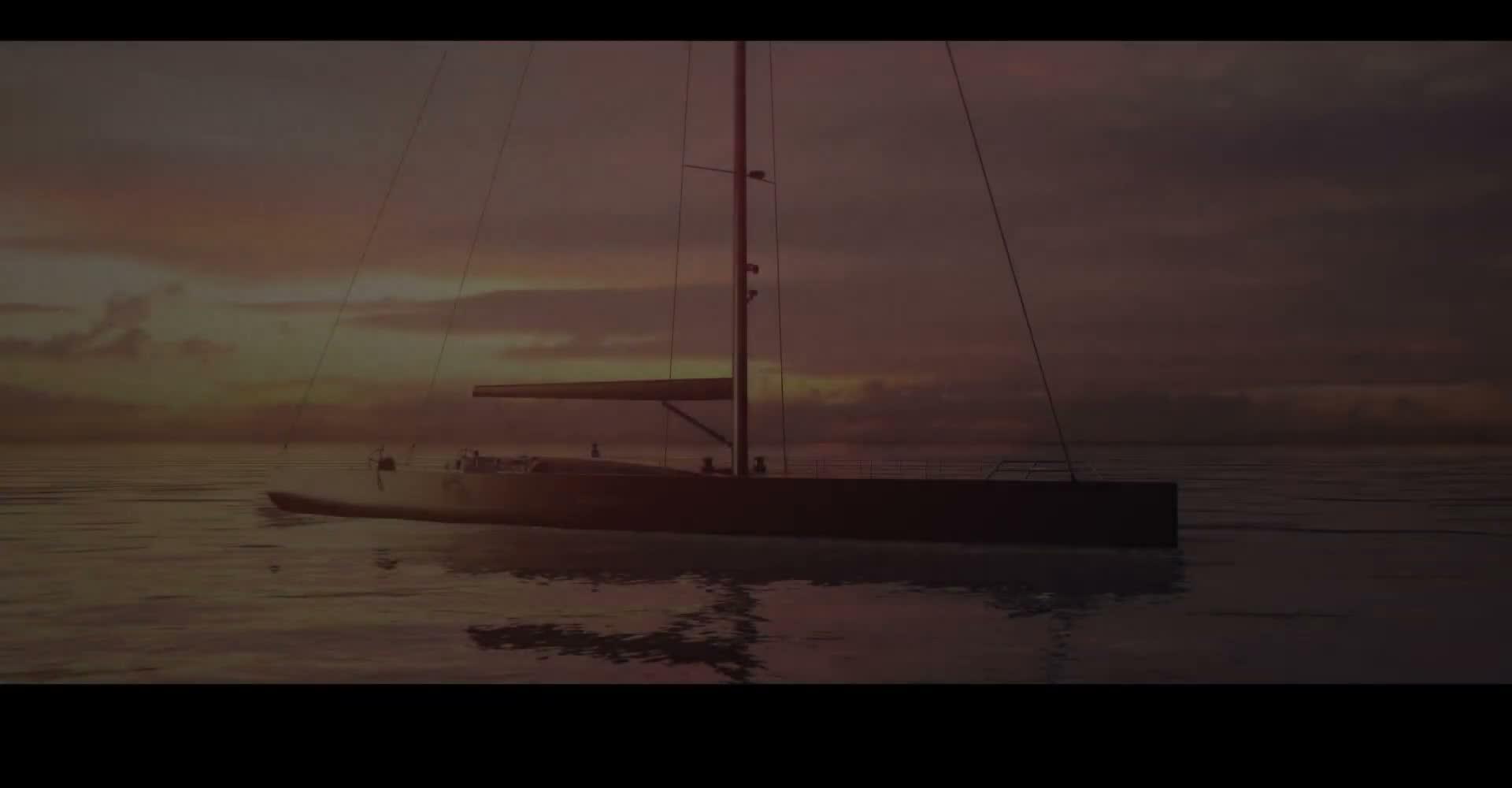
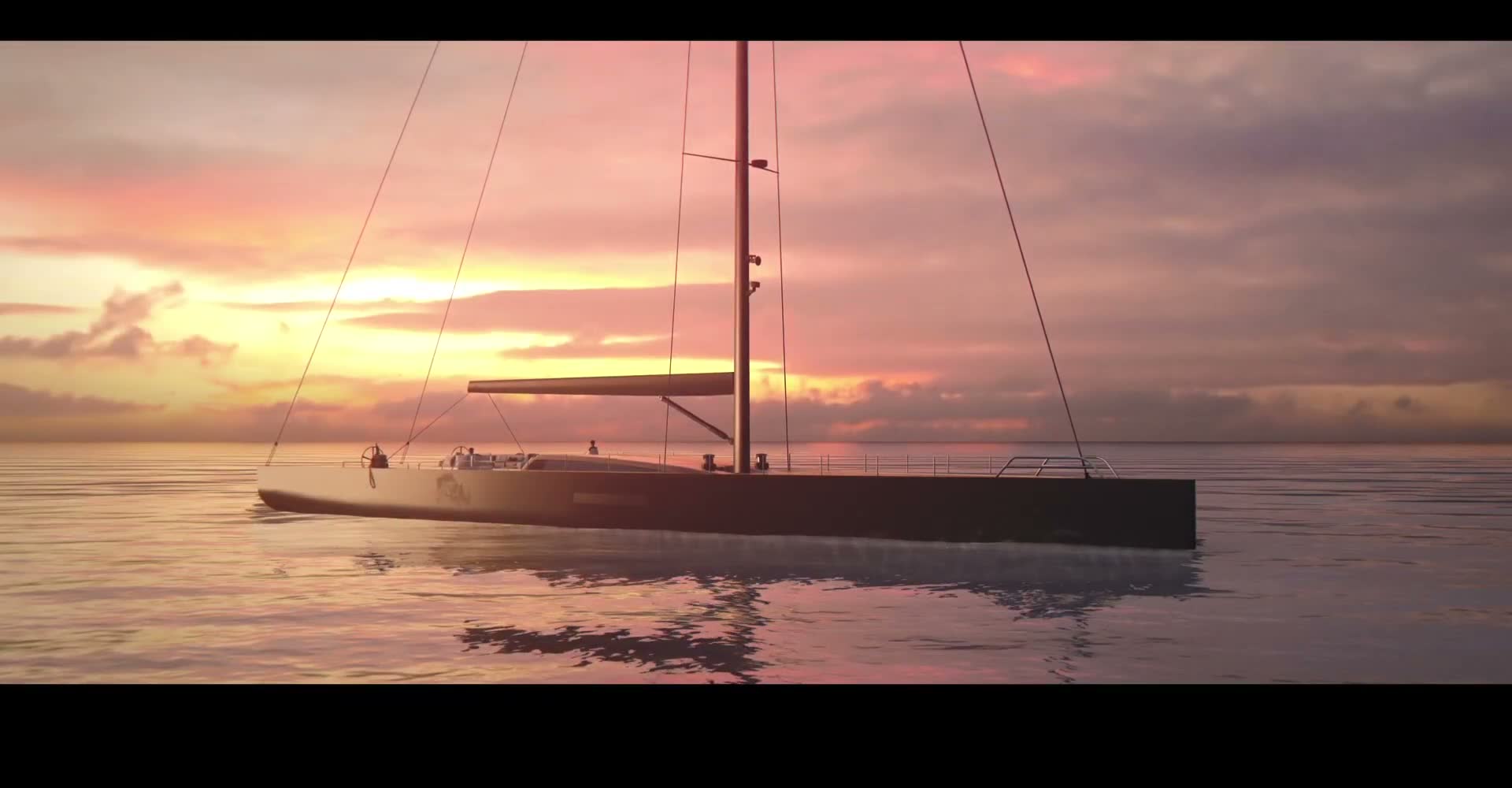
After a brief moment of black, the scene fades in on a wide establishing shot: a sleek sailing yacht drifting on calm water as the sun sets, painting sky and sea in deep oranges, pinks, and purples. The camera lingers on the boat for several long seconds, letting the atmosphere sink in.
If you played through Chapter 15, you know exactly where you are — that chapter ended on this same yacht. Wave of the Future picks up without the slightest gap in continuity.
Deck Lounge — Champagne on the Cushions
The camera pushes in from the wide exterior shot to the yacht's deck lounge area. Bond sits on cream-coloured leather cushions wearing a white t-shirt, relaxed but alert. Across from him on the lounge seating is a dark-haired woman in a white top with black trim, bare shoulders catching the sunset. Between them on a low wooden table sits a champagne bucket with a bottle on ice.
She reaches for the bottle, pours two flutes, and offers one across the table. The camera frames both of them together in medium two-shots — you see their body language, the space between them, the boat's steering wheel visible behind her, the endless ocean beyond the rail.
This is the widest you will see the scene. Every subsequent shot pushes tighter.
Close-Up — Faces in the Golden Light
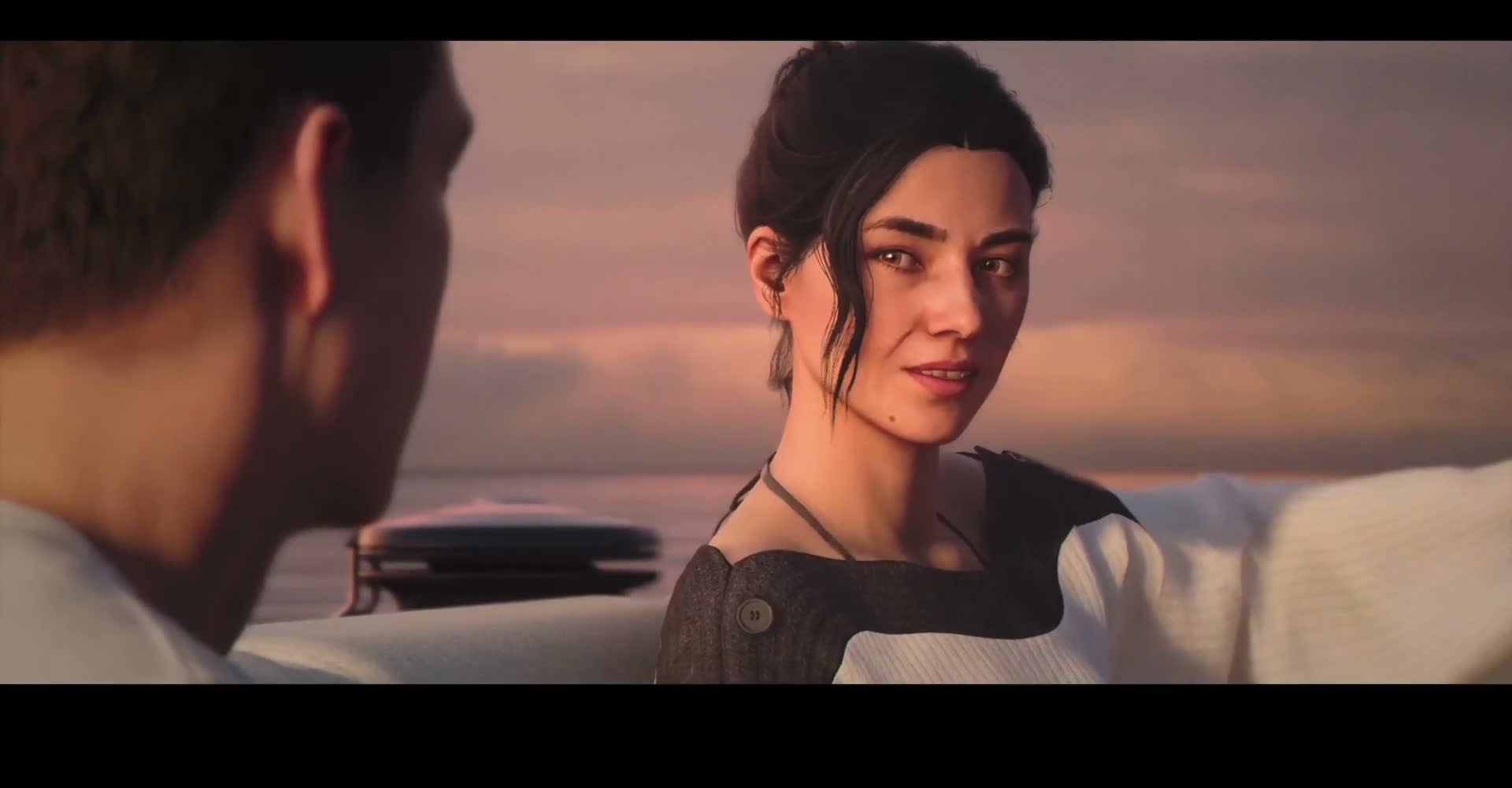
The camera abandons the wide framing and moves in tight. From this point through the rest of the scene, you are in close-up territory: tight over-the-shoulder shots, intimate two-shots, and face-filling close-ups that catch every micro-expression.
She clinks her glass against his, smiles, takes a sip. Bond raises his own glass and smiles back — but his eyes never fully relax. There is a scar visible on his cheek in the close shots. The golden sunset light catches the edges of her hair and the rim of her champagne flute.
The contrast between the beauty of the moment and the tension underneath is pure, classic Bond: two attractive people sharing a drink in paradise while discussing things that will get people killed.
The Banter and the Wheel

The conversation shifts between playful banter and pointed exchange. She leans back on the cushions, crosses her legs, and at one point stands briefly and moves toward the yacht's wheel before returning to her seat — a small, natural piece of blocking that says she is completely at home on this boat.
The champagne flutes are raised more than once. The camera occasionally pulls back just enough to remind you where you are: the sails, the rigging, the ocean stretching to a horizon burning orange and pink. The light deepens as the sun drops lower — the warm tones become richer, the shadows longer.
Face to Face — The Calm Before
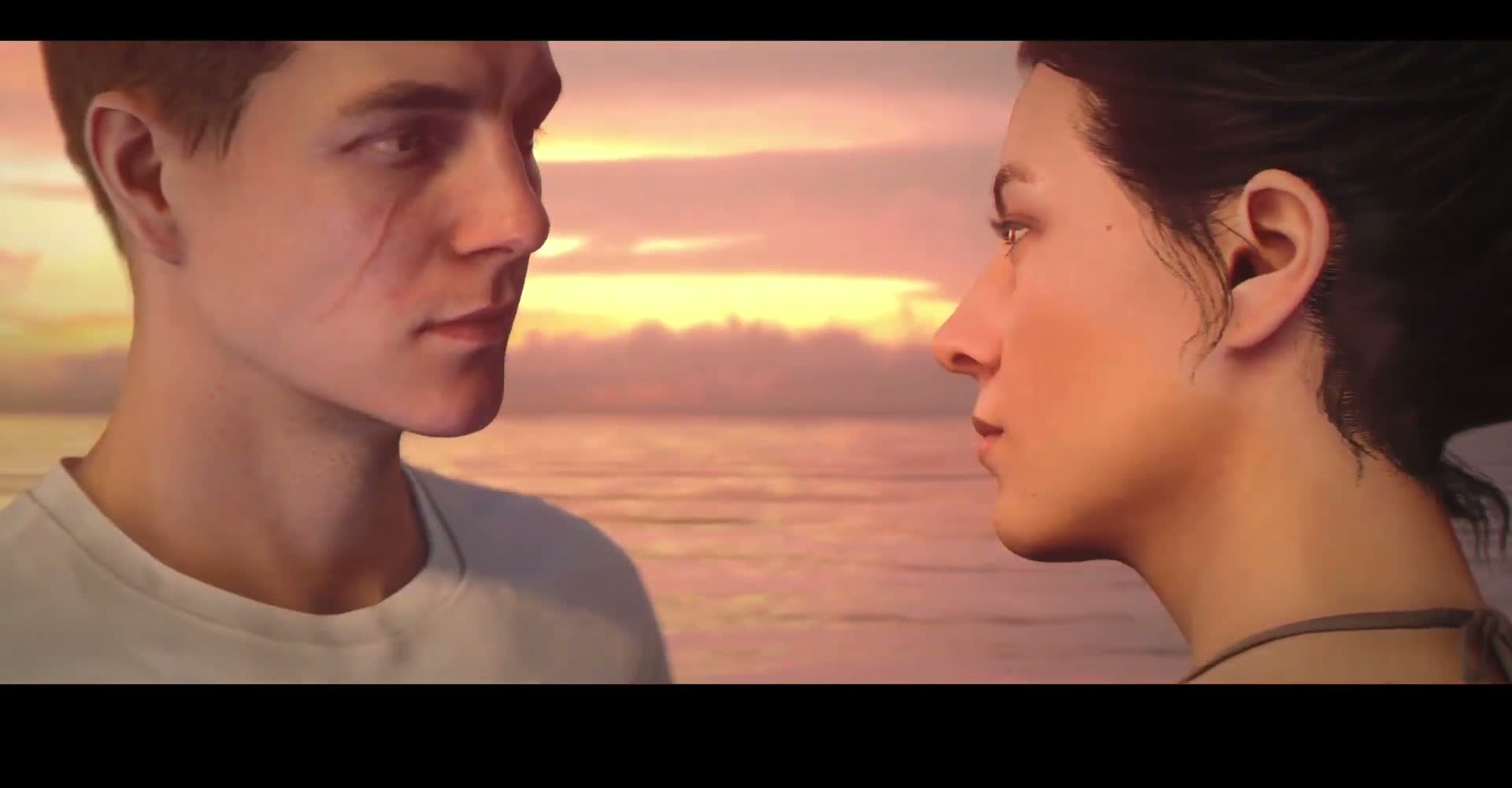
The conversation reaches a pause. The camera pushes in to its tightest framing of the scene — profiles inches apart, the sunset ocean blurred behind them, no champagne flutes, no furniture, just two faces and the weight of everything unsaid passing between them. Bond looks at her; she looks right back.
For a long beat the only sound is water against the hull. Then something shifts in his expression. The charm drops. And the scene cuts — hard.
If you have seen enough spy films you know how these golden-hour interludes end: beautifully, and badly.
Underwater
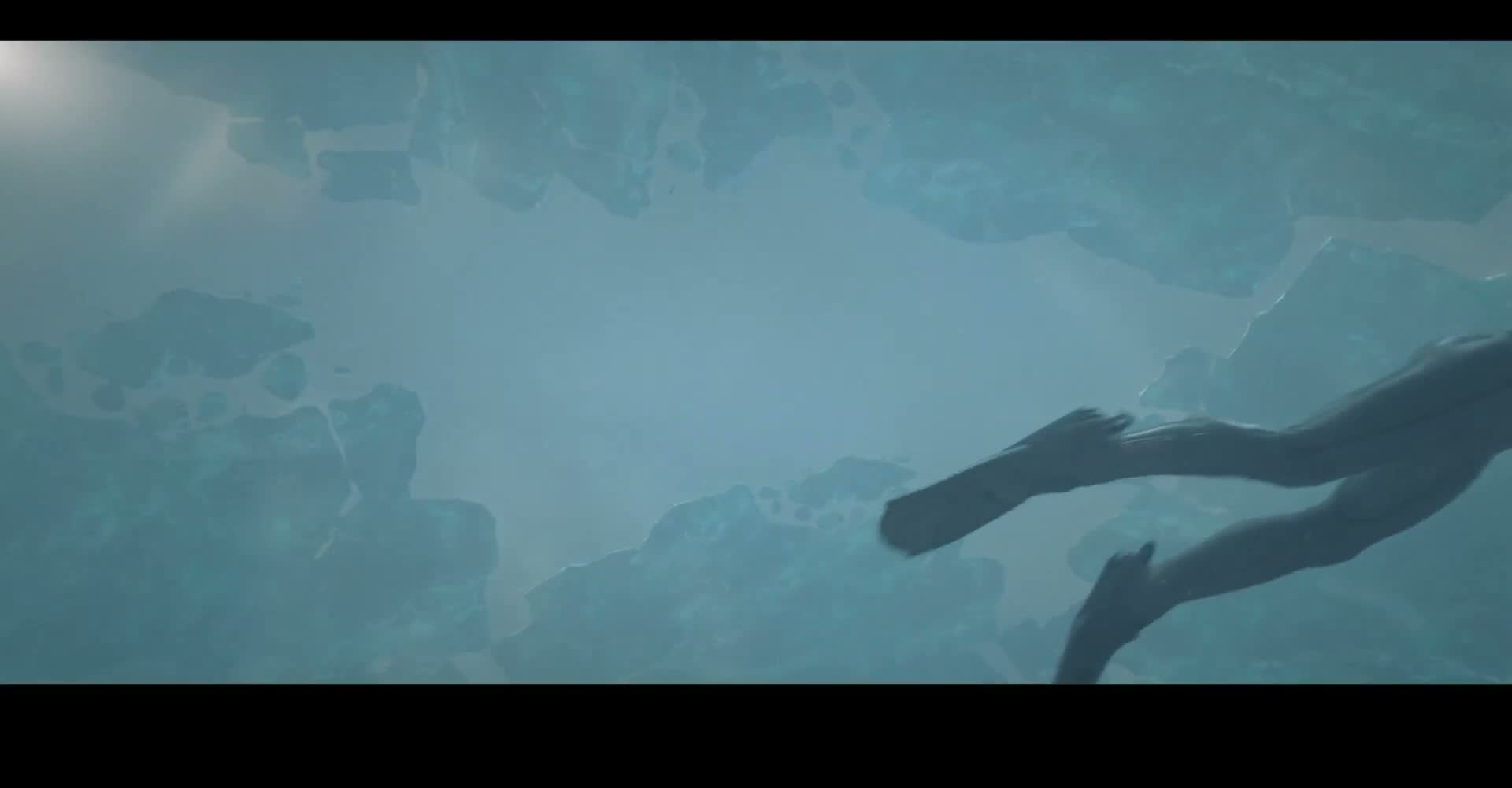
Without warning, you are underwater. Warm sunset colours replaced by the deep blue-green of cold ocean. Bond is swimming — kicking downward, dark clothes streamlined, bubbles streaming from his movement.
The transition is deliberately jarring. One moment sipping champagne in golden light; the next holding your breath in the deep. How and why Bond ends up in the water is handled by the cut; you are simply in it, and you start swimming.
Antarctica — Cold Landing
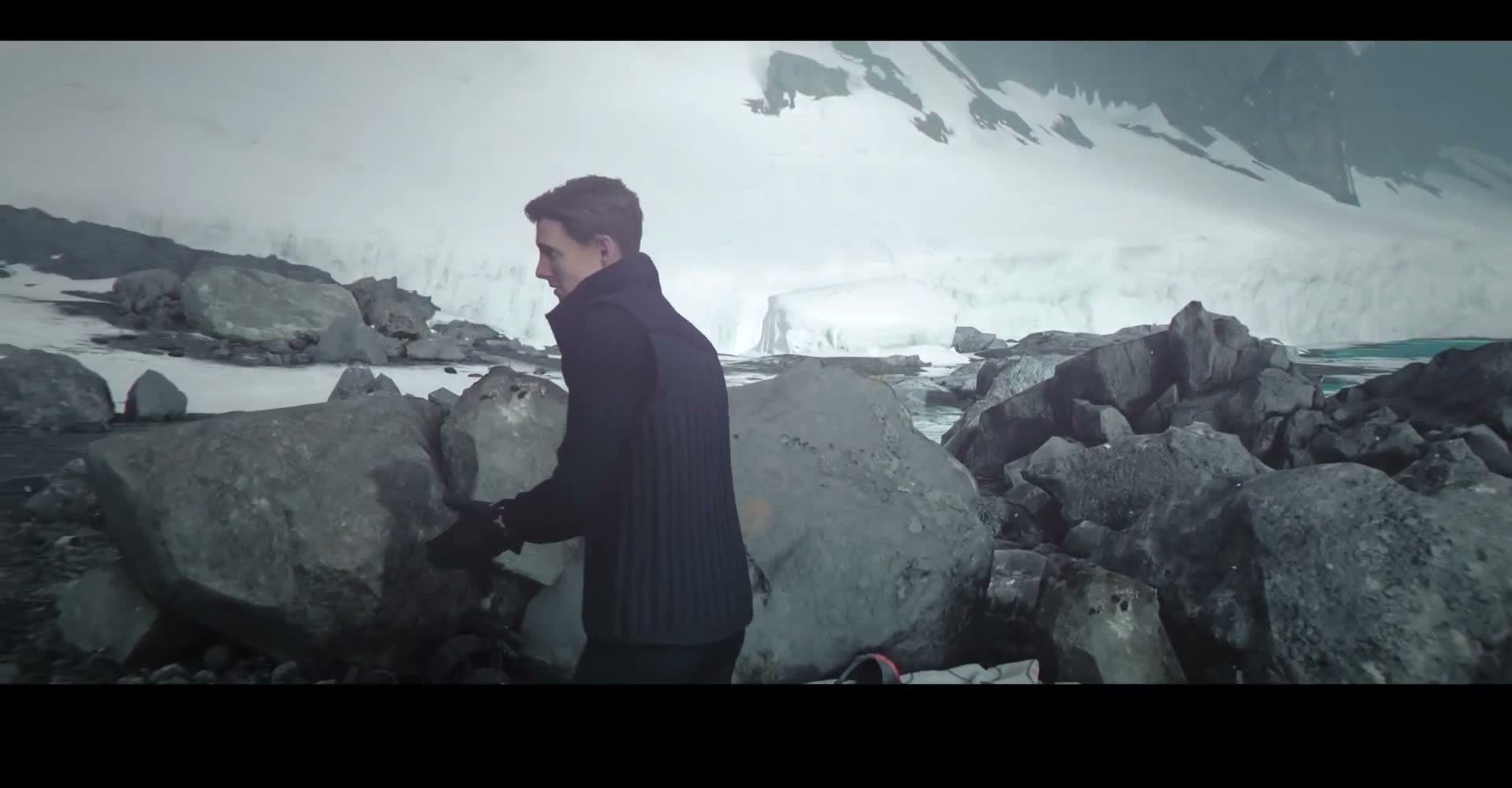
The underwater sequence transitions, and suddenly you are above water in a completely different world. The yacht, the sunset, the woman — all gone. You are looking at a bleak, rugged coastline of dark rock streaked with snow under a grey overcast sky.
The contrast could not be more brutal. You were somewhere warm at golden hour; now you are somewhere cold, somewhere that feels like the bottom of the world. Bond wears a heavy dark coat now. The ground is uneven rock, wet in places, with drifts of snow and occasional patches of brown, windswept vegetation clinging to sheltered spots.
Trekking Across the Snow
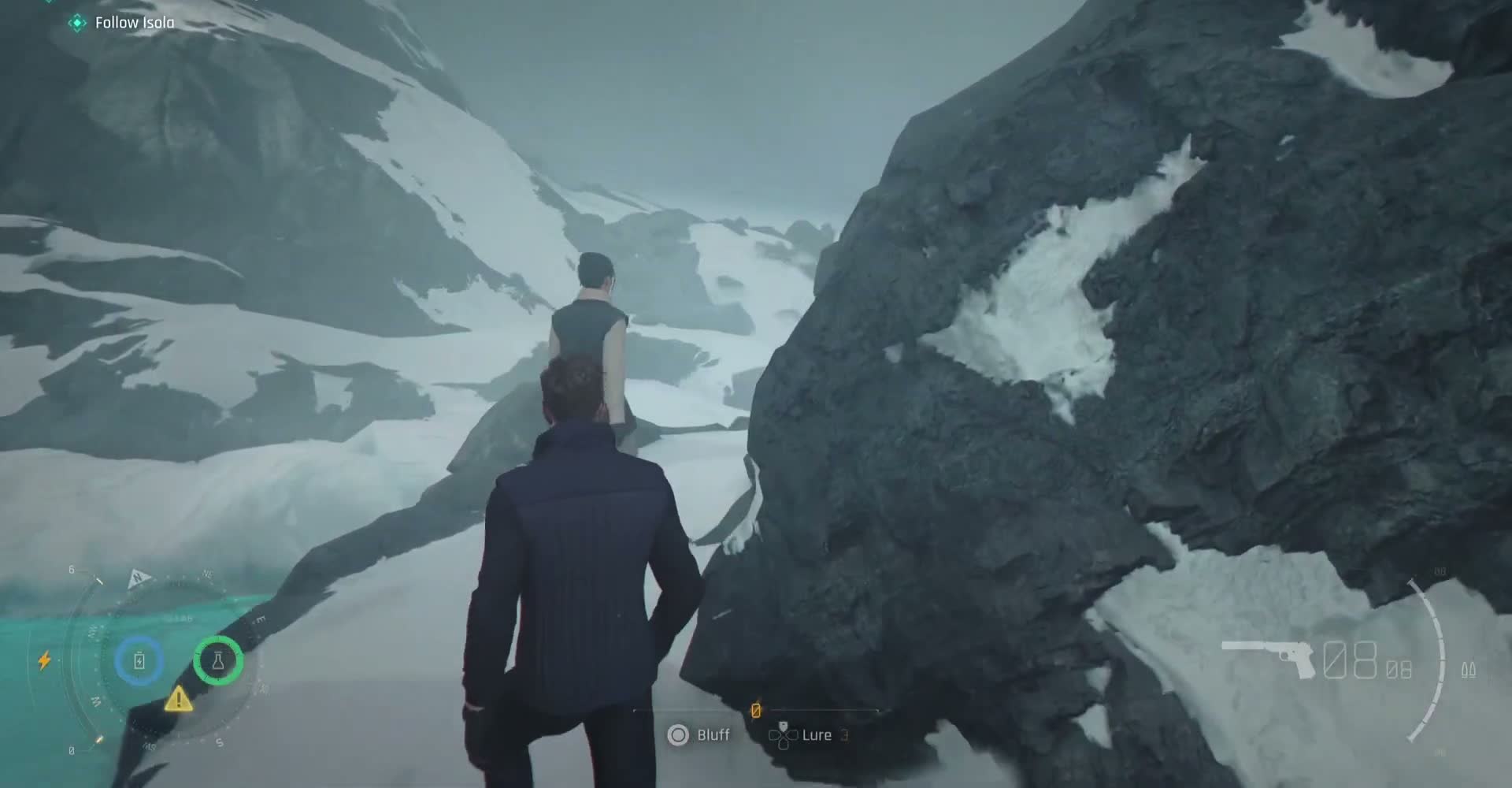
The first gameplay section is a long trek across the exterior. You are on a narrow trail winding along a rocky, snow-dusted cliffside. The wind howls across the open terrain and the environment feels genuinely exposed and hostile.
Other figures are visible in the distance along the path ahead. This is not a desolate wilderness; it is a secured facility perimeter. Stay low, keep to the rocks, and move when patrols are not looking.
Along the Cliff Face
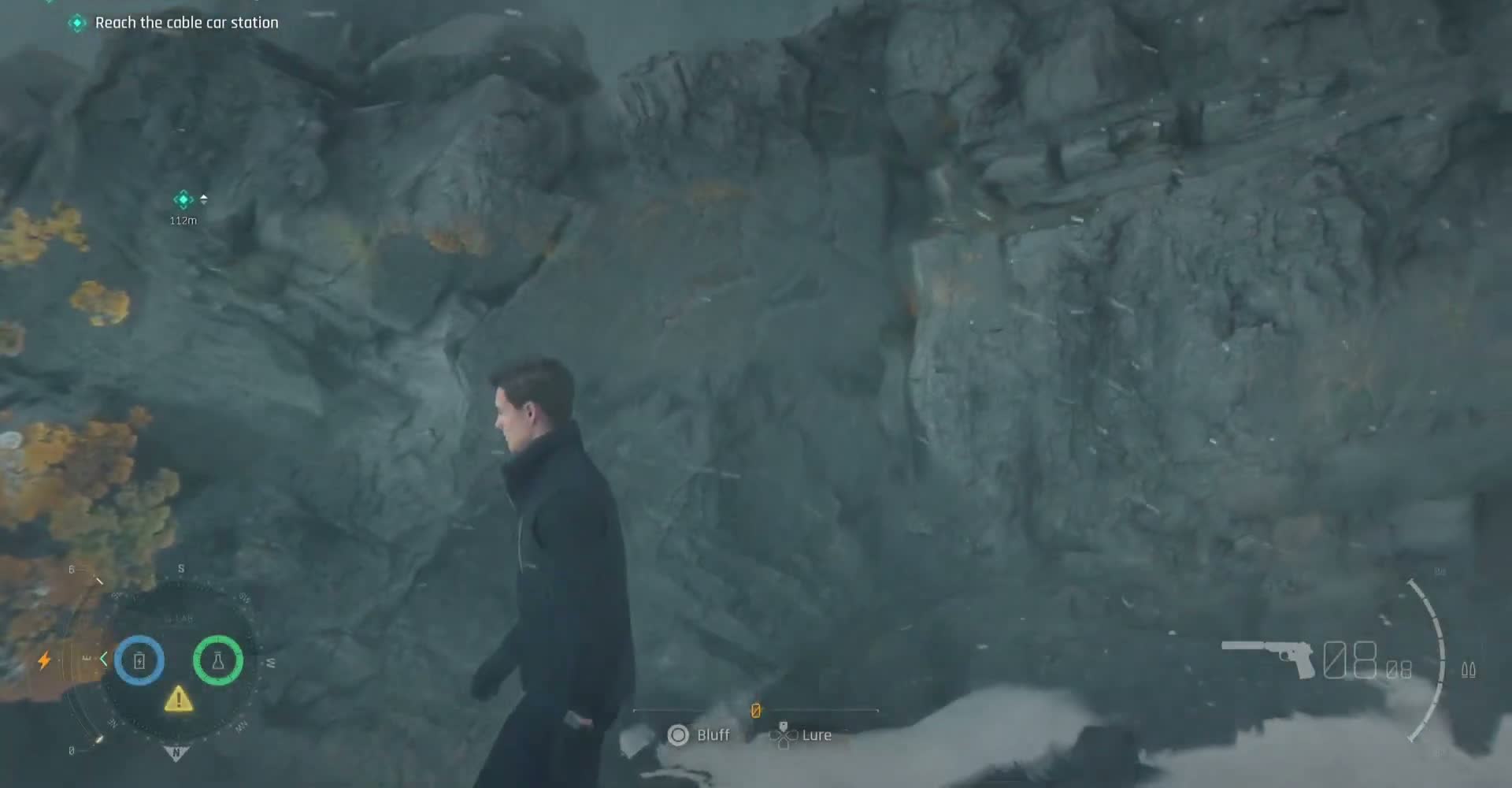
The path continues along the cliff, wind constant, light flat and grey. Rounding a corner reveals more of the facility ahead — outbuildings, fencing, the infrastructure of a large secured installation carved into rock and snow.
This section is fairly linear. Follow the trail, use rock outcroppings for cover when you see or hear anyone ahead, and keep moving inward.
Approaching the Facility
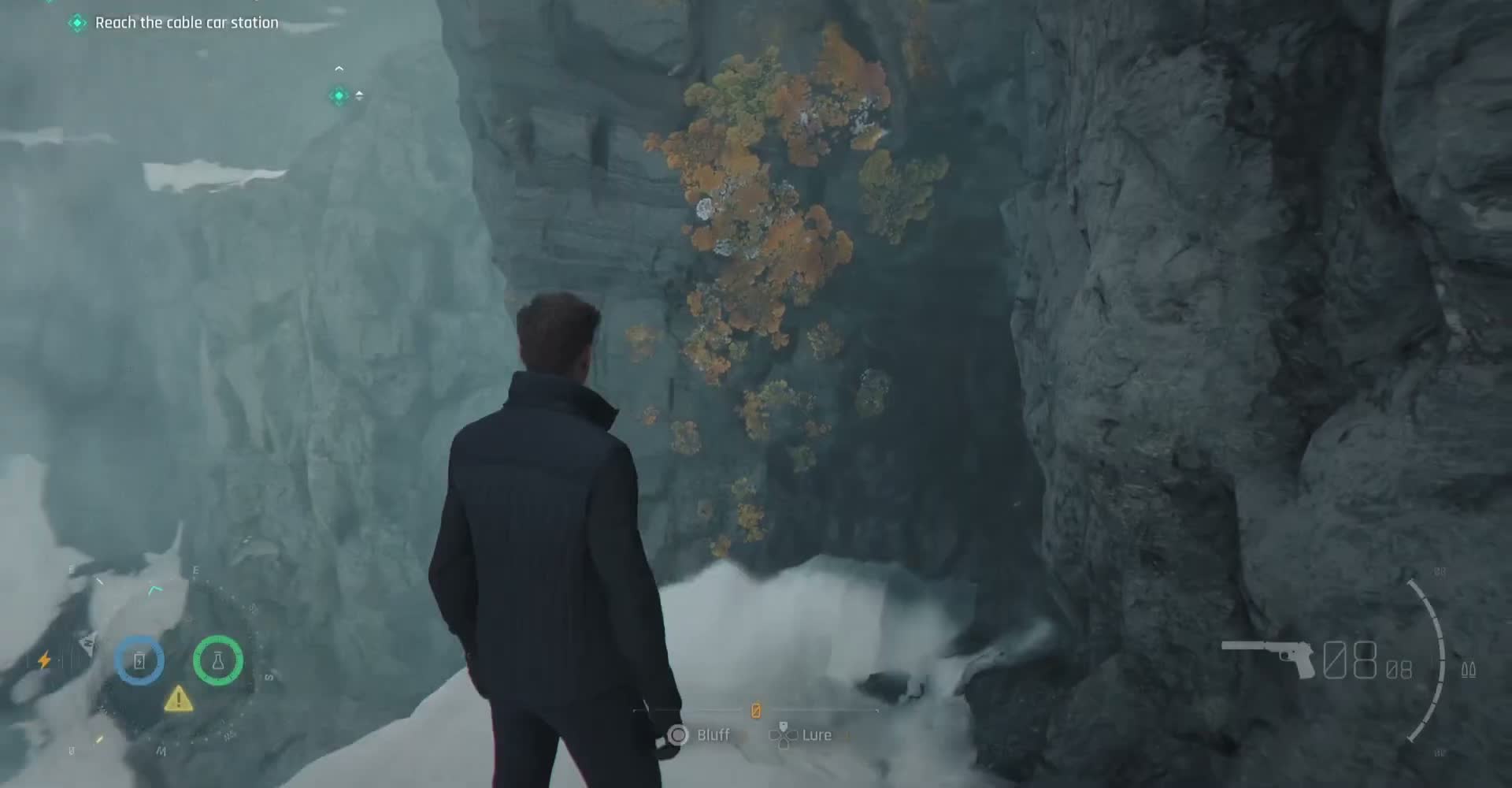
Getting closer to the outer structures, the path opens slightly and you encounter your first real stealth opportunities. A few workers/guards patrol exterior areas around supply crates and outbuildings.
Snow and rock give plenty of natural cover, but open terrain also means you can be seen from a distance if you stand and run. Move slowly, stay crouched, use the terrain.
Snow and Rock — Final Exterior Approach
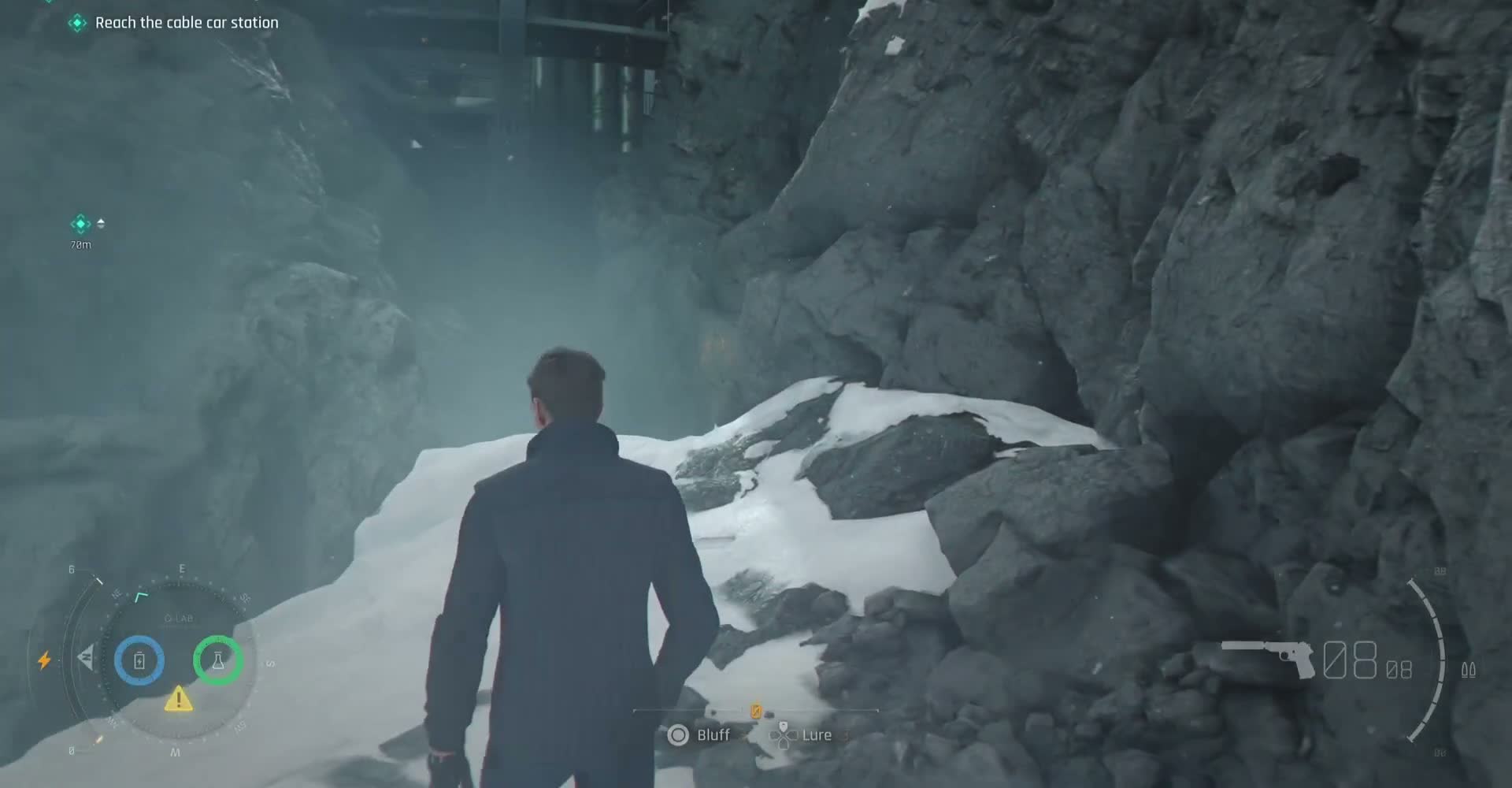
The last stretch of exterior terrain is the rockiest, with uneven ground and large boulders for cover. You are close enough now to see the facility entrance: a dark opening in the rock face or service entrance set into concrete.
Depending on how you handled exterior patrols, this is either a quiet slip through a door or a desperate sprint under fire.
Loading Bay
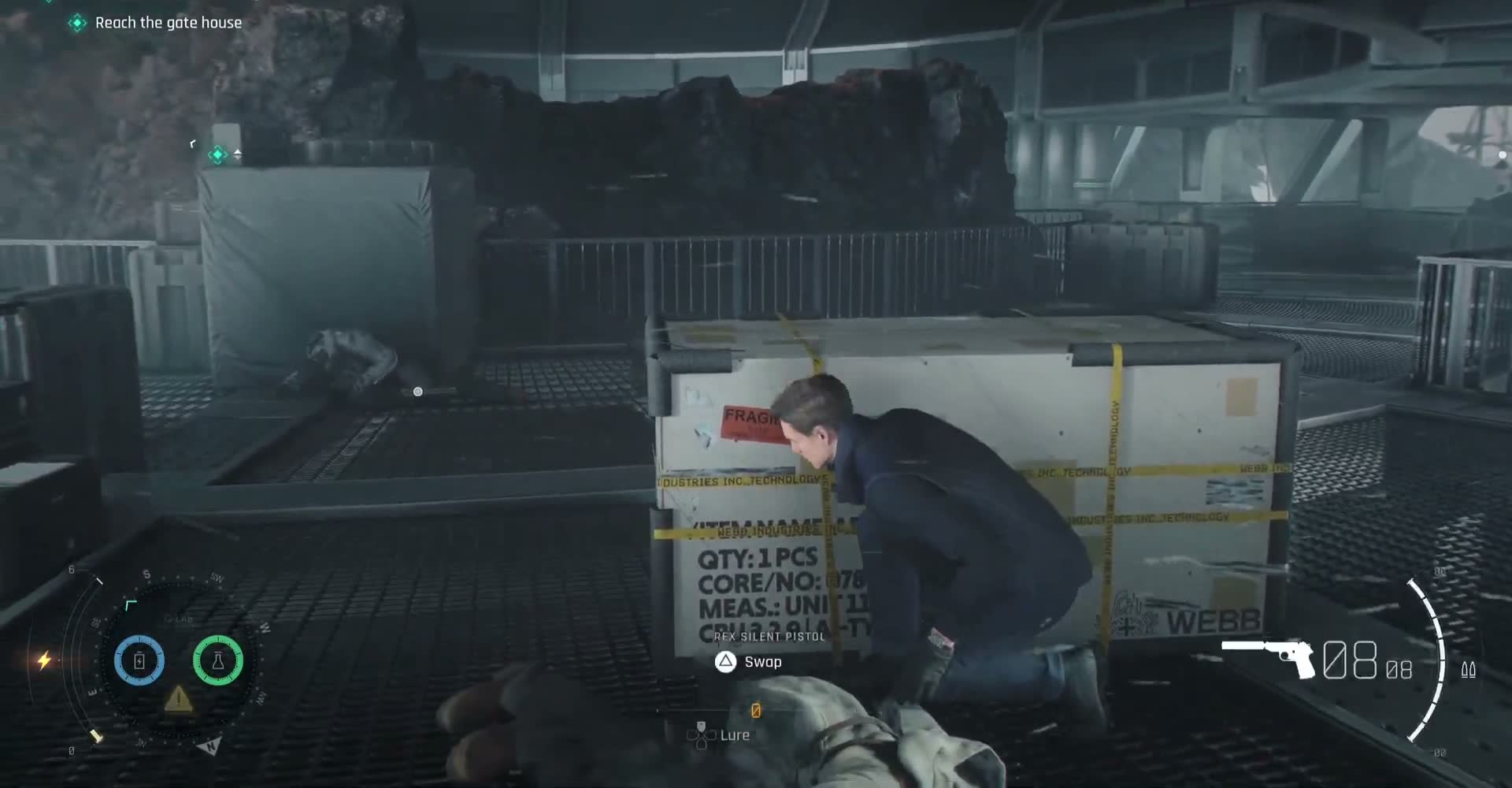
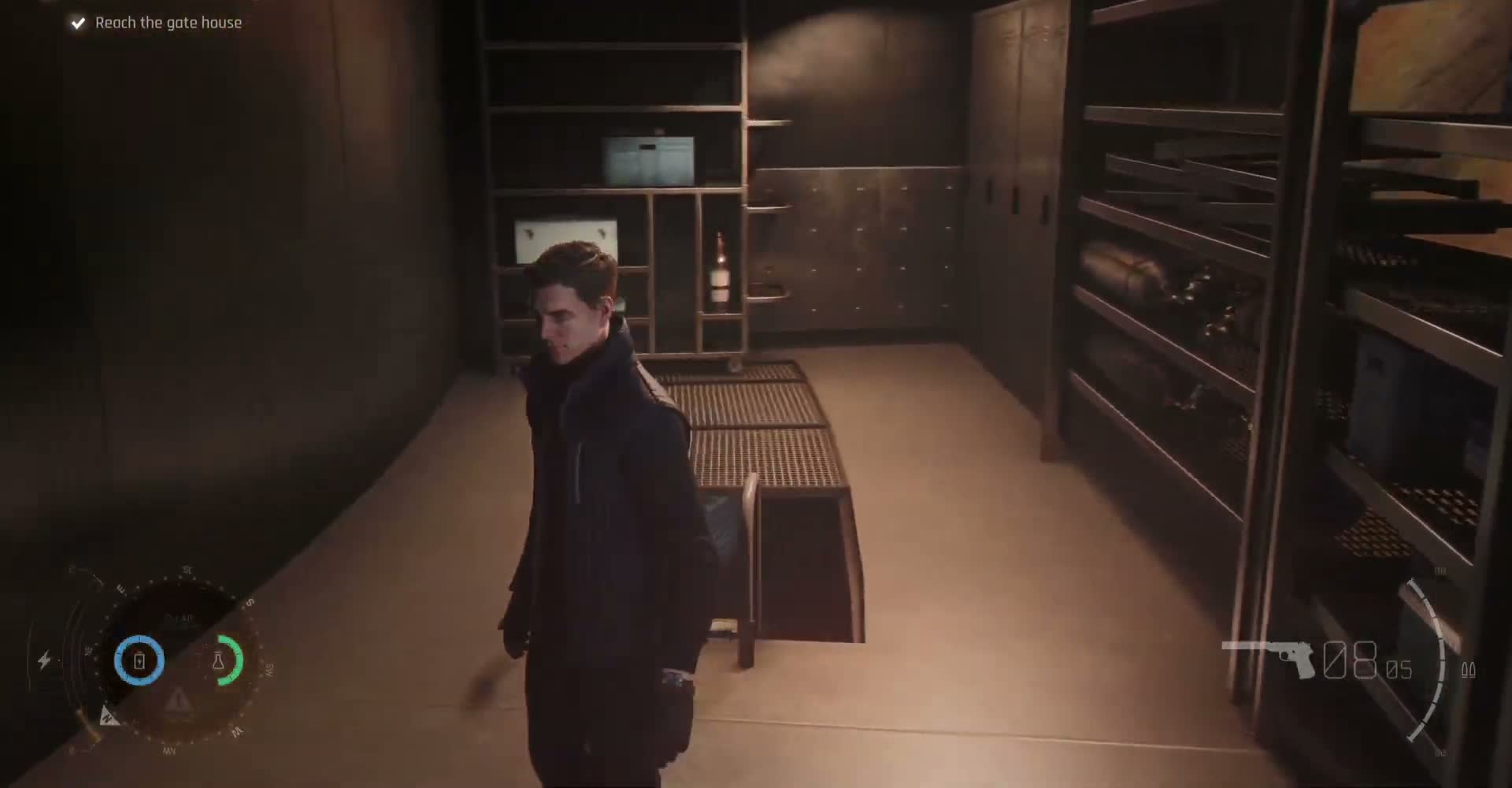
The facility interior hits immediately with a shift in atmosphere: warm air, artificial light, machinery hum replacing wind howl. You are in a loading/supply bay — concrete walls, metal shelving, large cargo crates, industrial lighting.
There are people in here. A figure in white workwear is bent over something near a crate as you enter. Stay in cover behind stacked cargo and assess the room before moving.
Service Corridors
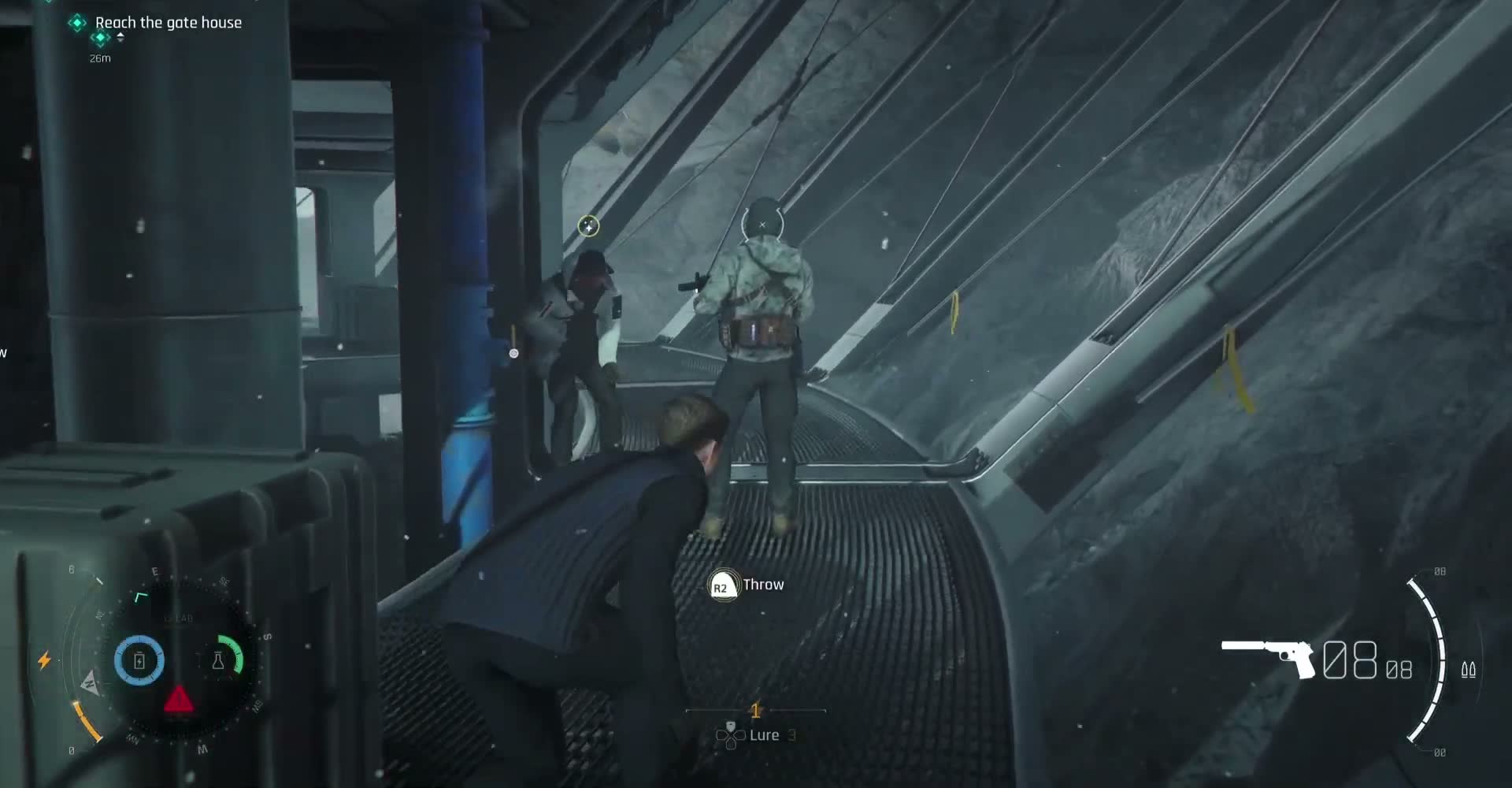
Past the loading bay you move into the facility's service corridors: stark, functional spaces with painted metal walls, exposed conduits overhead, non-slip flooring. Lighting is a mix of cold white overheads and occasional amber safety lights.
This is classic third-person stealth: narrow corridors with occasional branching rooms, guards on set routes, cameras possibly covering key junctions. Listen for footsteps, radios, conversation around corners.
First Interior Encounter
Rounding a corner brings you face-to-face with a staff member or guard in a narrow corridor — the kind of abrupt encounter these tight corridors create frequently. It tests your reflexes and your commitment to stealth.
If you are quick and silent, a fast melee takedown resolves this before anyone is alerted. If you hesitate or make noise, you trigger a response.
The Lobby
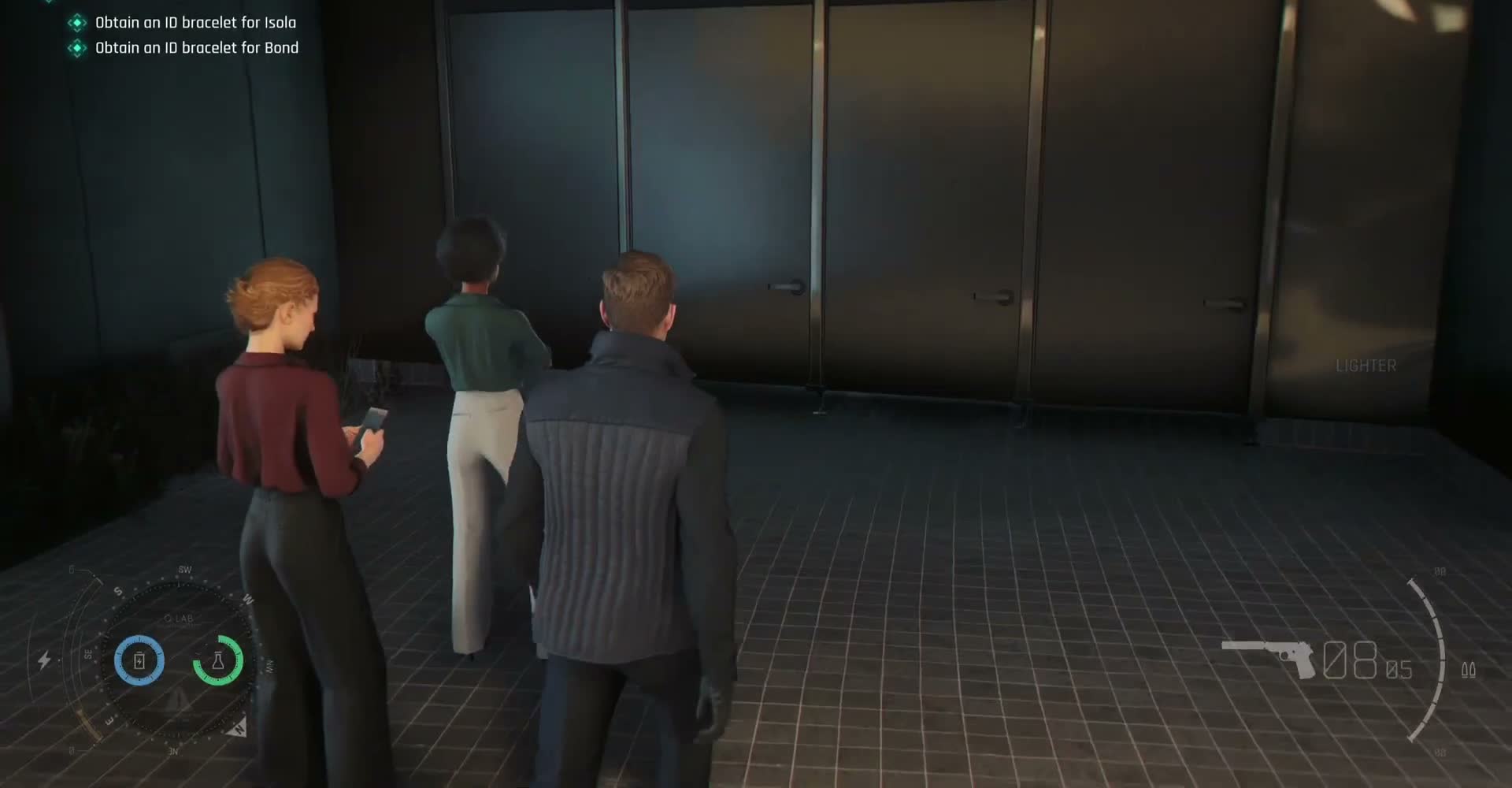
Push deeper and the architecture changes dramatically. You emerge from sterile service corridors into what looks like an interior lobby or reception area — completely different in tone. There are people in civilian clothing: a woman in a rust-red top, a man in a grey jacket, people talking in clusters.
It looks like the lobby of a luxury hotel or corporate HQ, not a secret Antarctic research facility. That contrast is intentional: the facility presents a polished face to legitimate visitors.
Between Inside and Outside
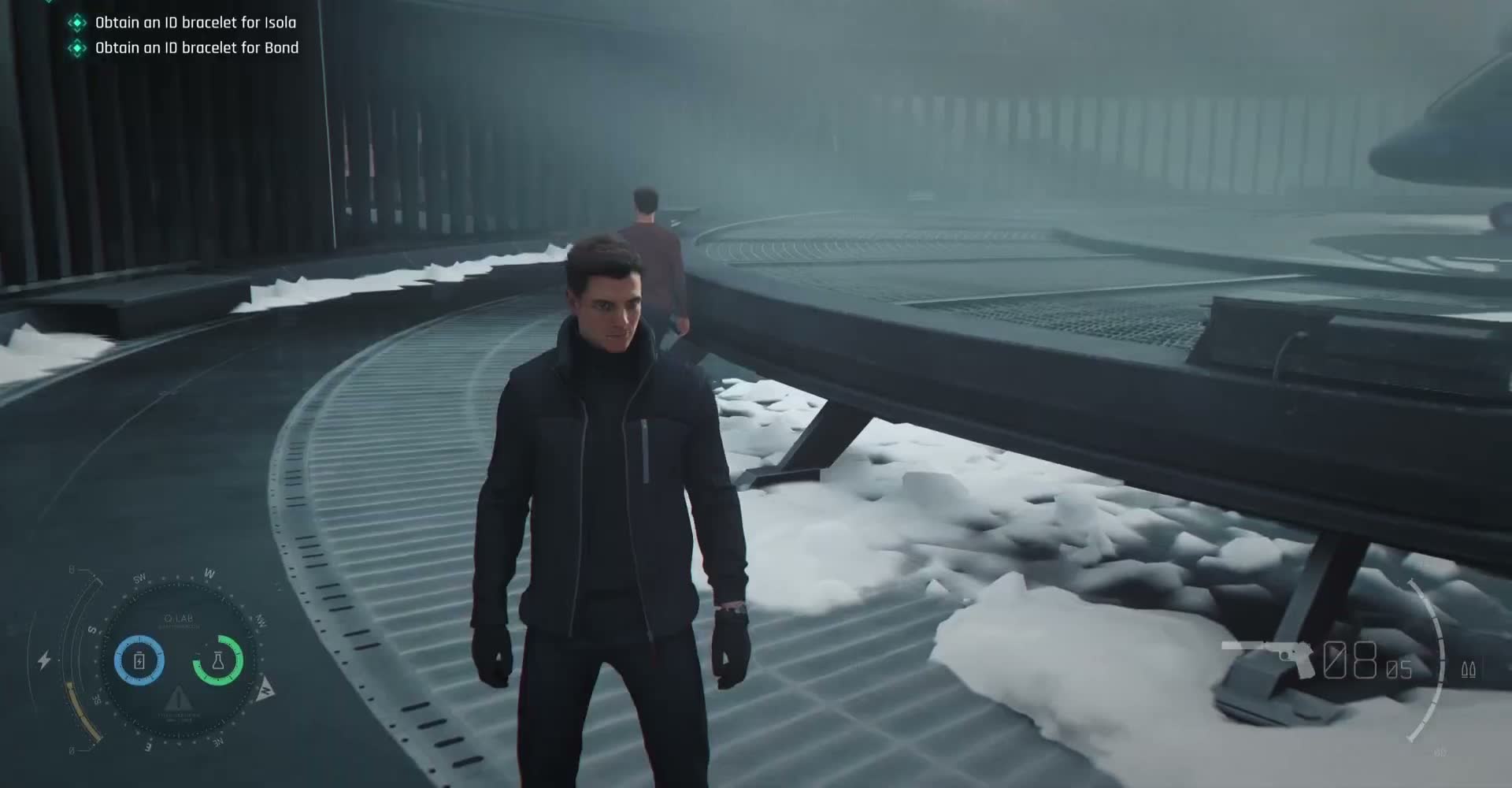
The facility is more layered than a simple in/out structure. You will cross transitional spaces where you glimpse snow and rock outside through large windows or open loading docks — reminders of where you are.
These in-between areas tend to have fewer people but more security hardware: cameras, access panels, locked doors.
The Atrium — Greenery in the Snow
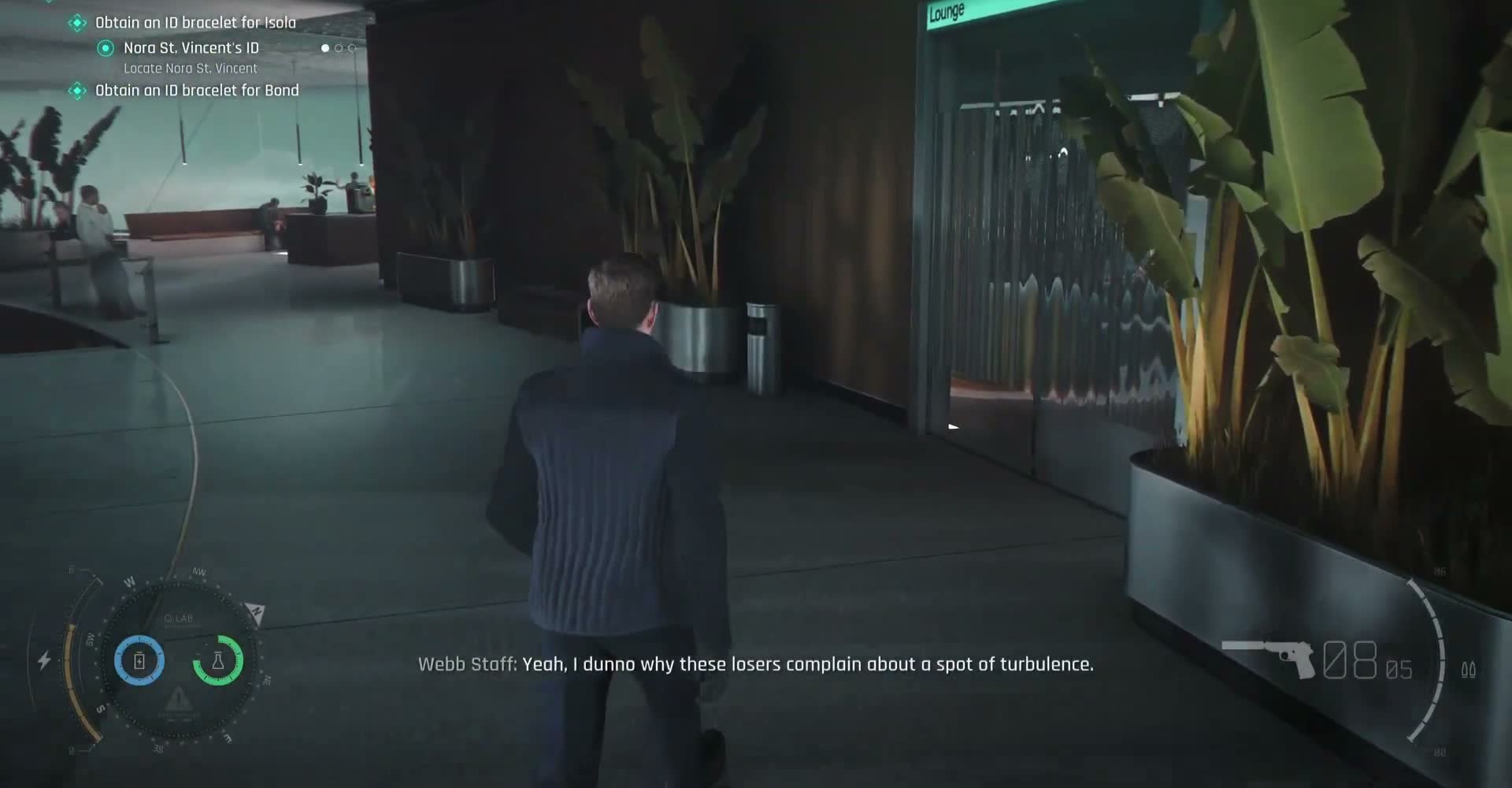
One of the most memorable spaces is a wide, curved atrium lined with enormous potted plants and palms — lush greenery you would never expect inside an Antarctic installation. The architecture is sweeping and modern with polished floors and curved walls.
This feels more like a luxury spa or a billionaire's private compound than a research facility. It tells you something about whoever built this place: they value comfort, beauty, and the appearance of control over a hostile environment.
Through the Garden Corridor
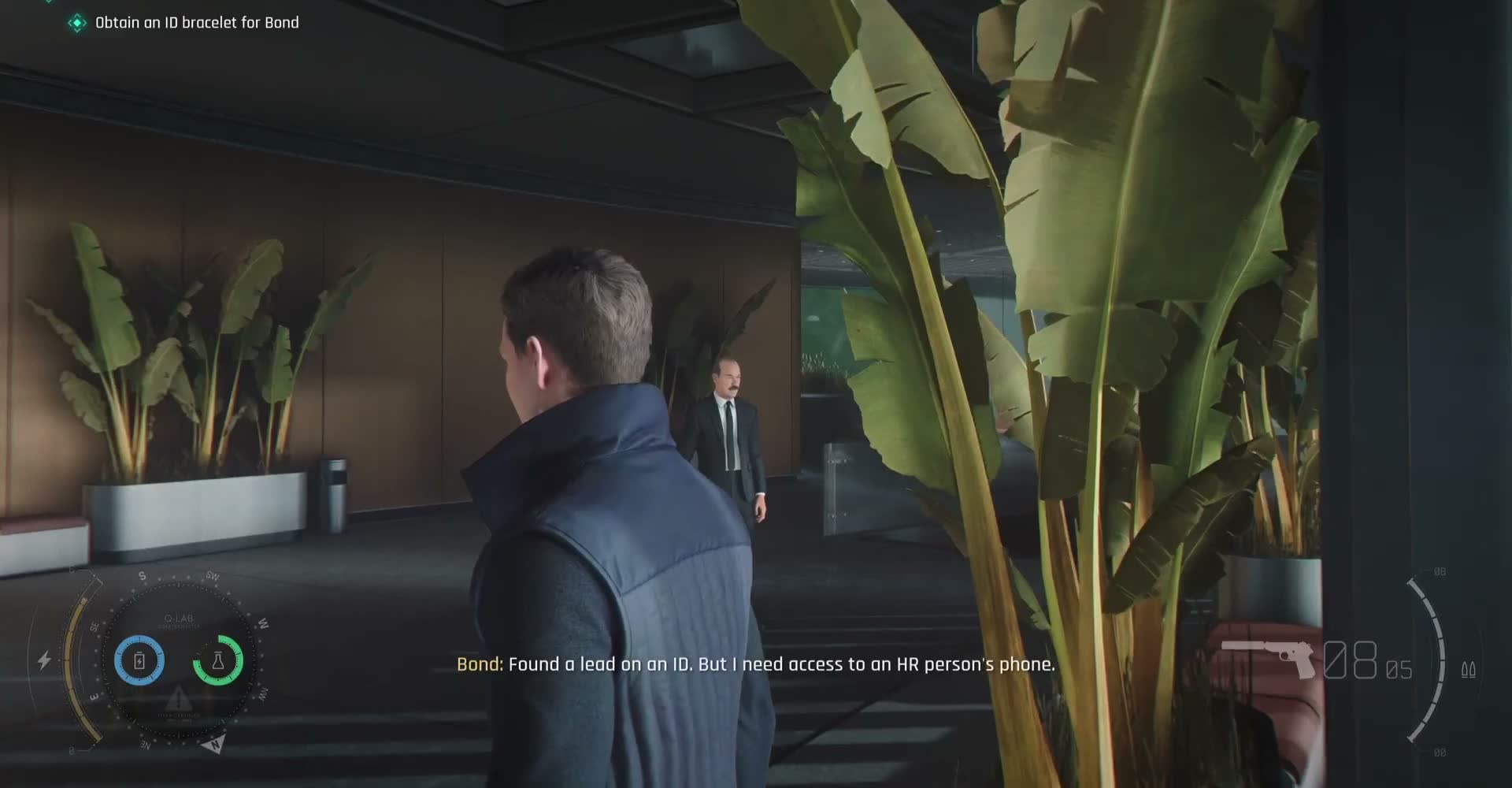
You continue through the planted atrium, tropical greenery creating a surreal contrast with what lies beyond the walls. Sound is different here too — the hard echo of metal corridors replaced by soft rustle of leaves and more muted acoustics.
There are guards in this area but they are spaced out, and the plants give plenty of concealment options. This is one of the more enjoyable stealth spaces in the level because the environment itself is so unusual.
Observation Deck — The Gathering
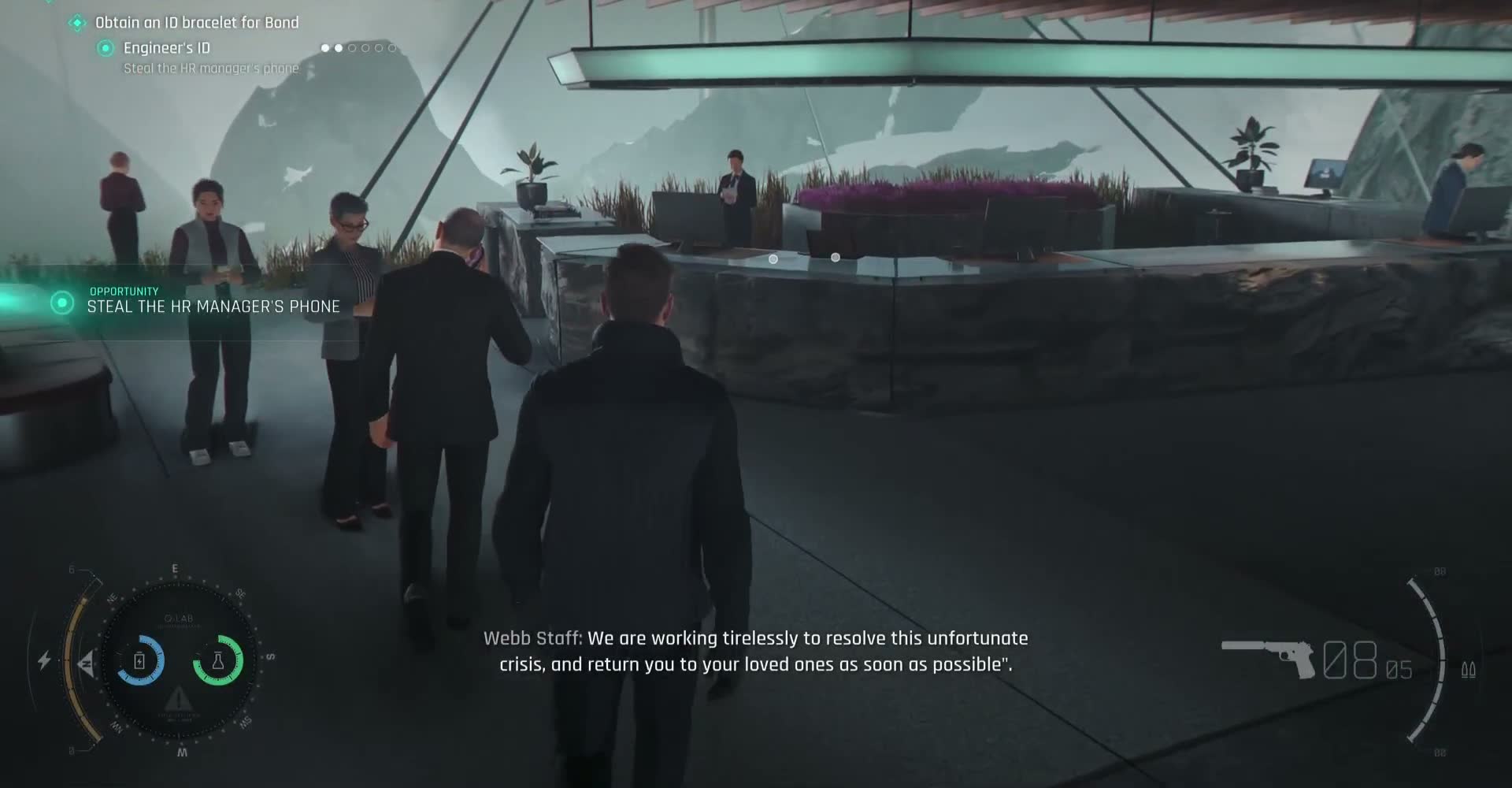
Around a corner you emerge onto a glass-railed observation platform/balcony overlooking a lower level — and what you see stops you cold. A formal gathering below: dozens of people in evening wear milling around a space with sophisticated lighting and what looks like a large-scale art installation (a suspended metallic sphere) dominating the room.
This is not a research facility in any conventional sense. This is a venue for wealthy, powerful people. Whoever runs this place has built something funded and attended by the kind of people who dress for dinner in Antarctica.
Past the Event
You navigate around the event space via service corridors or upper walkways. The contrast between the gloved, tuxedoed crowd below and your own cold, tactical progress above could not be starker.
This is masterful environmental storytelling — the game does not need to exposition-dump about money and influence; it shows you a black-tie party in the middle of Antarctica.
Outside Again — The Cliff
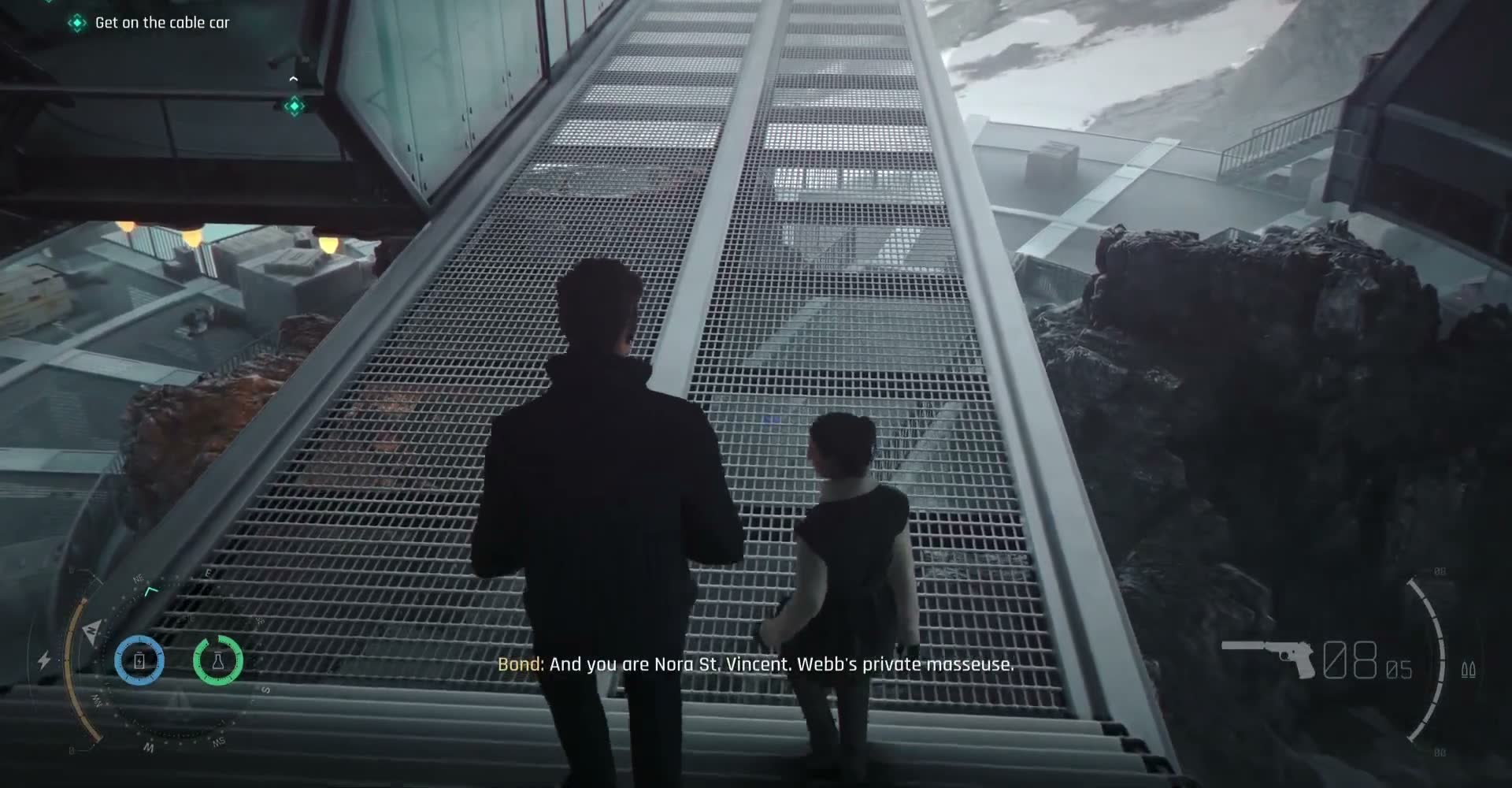
The route briefly takes you back outside onto a narrow metal walkway/gantry bolted to the cliff face. Wind hits instantly. Snow underfoot. And then something stops you.
Ahead on the path, standing alone at a drop edge, is a child — or someone the size of a child, in winter clothing, looking out over the snow and rock. It is an unsettling sight in this high-security environment.
The Robot
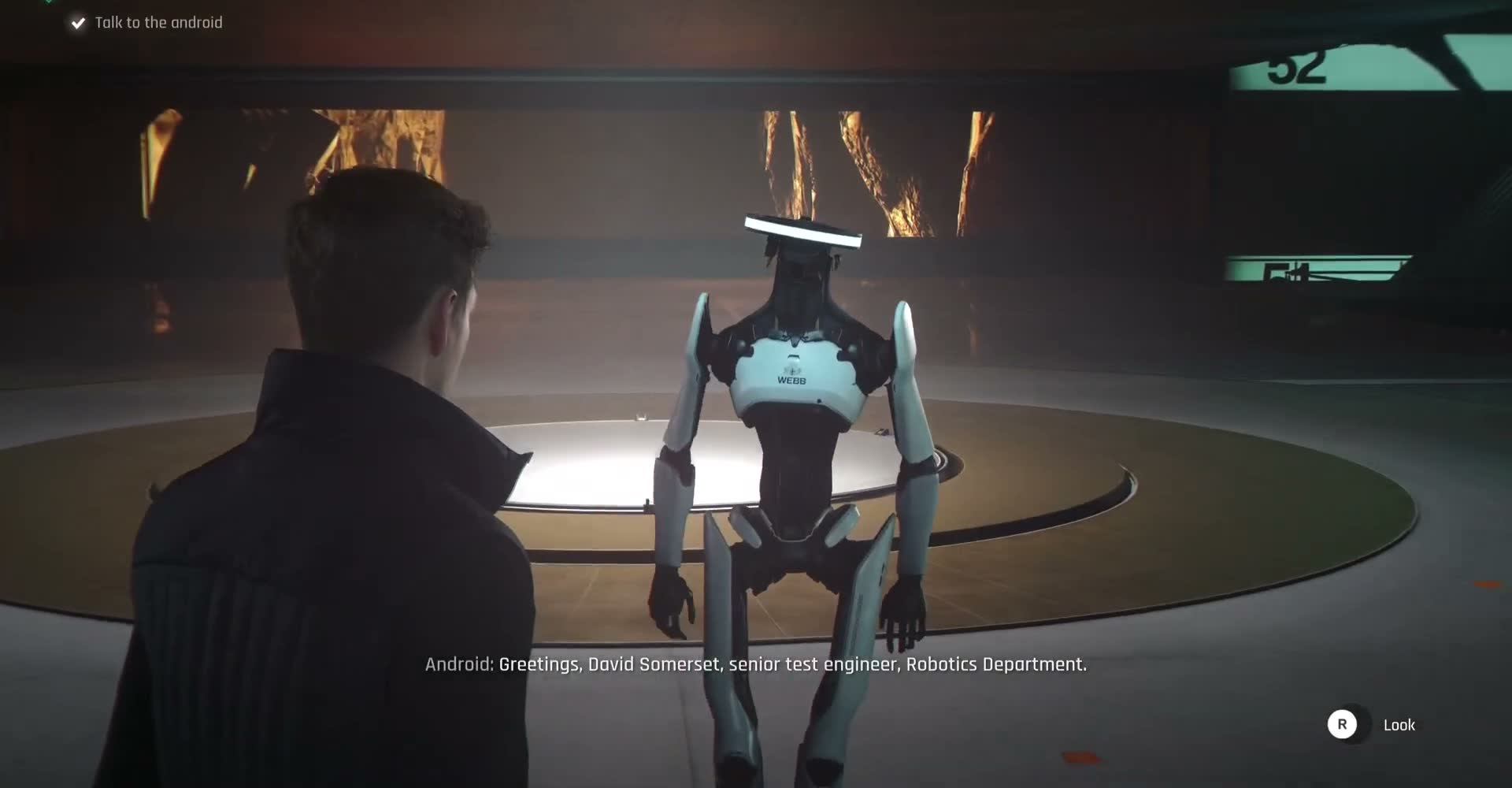
Whatever you expected to find in this facility, this is not it.
In a circular chamber with a distinctive floor pattern, you come face-to-face with a humanoid robot — a sleek, pale, unsettlingly human-like machine standing motionless in the centre of the room. It is not obviously armed, but its presence changes everything. This facility is not just about biotech or weapons or conventional espionage. They are building something else entirely.
Red-Lit Corridors
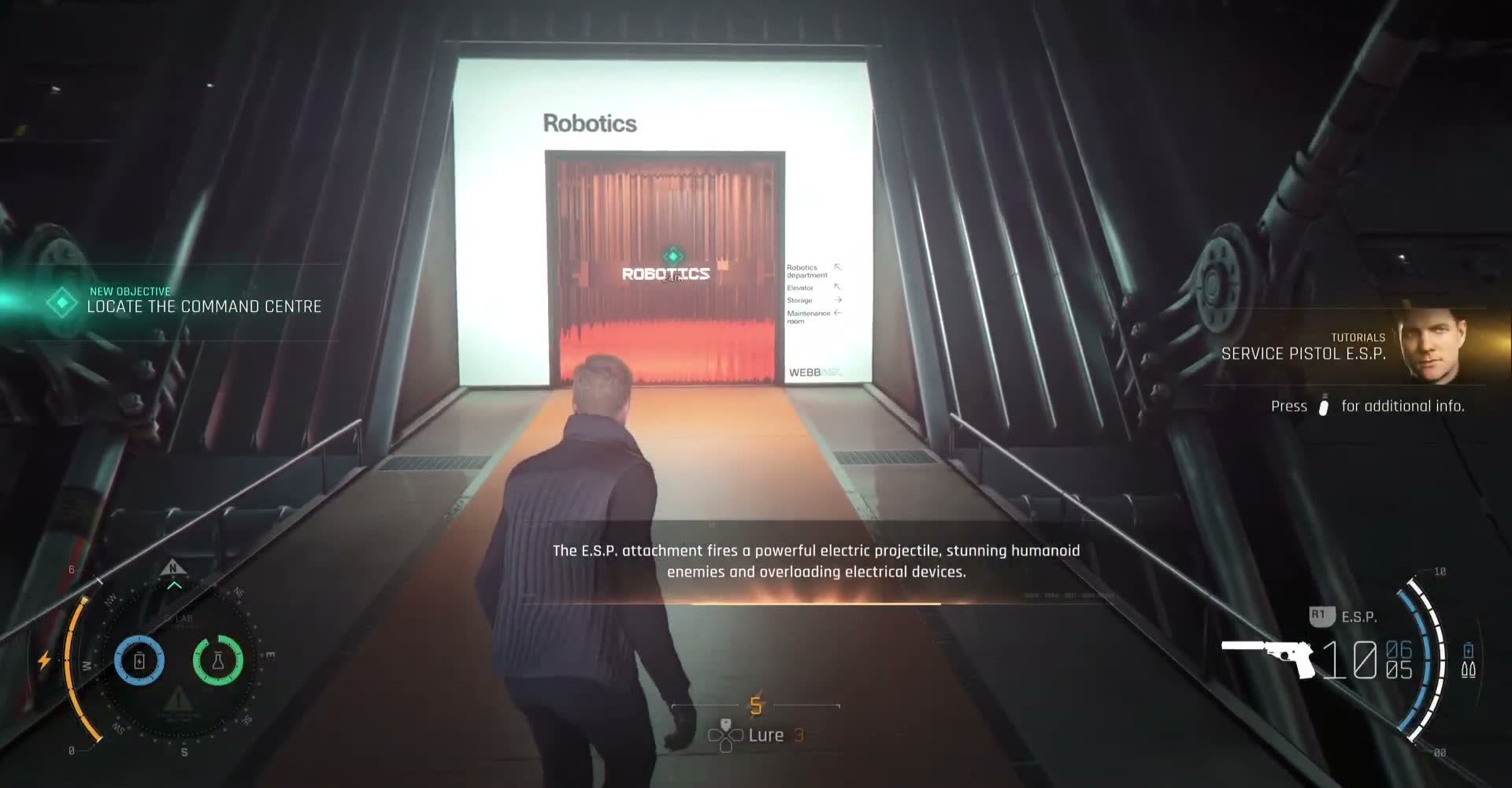
After the robot encounter, the facility goes into some form of lockdown or heightened security. Lighting shifts to red in sections, doors seal, guard presence ramps up significantly. You are past the polite, palm-lined part of the facility; the deeper you go, the more industrial and hostile it becomes.
A long corridor lit by a warm, reddish glow at the far end marks your path forward, leading to a sealed door or airlock.
The Sphere Room
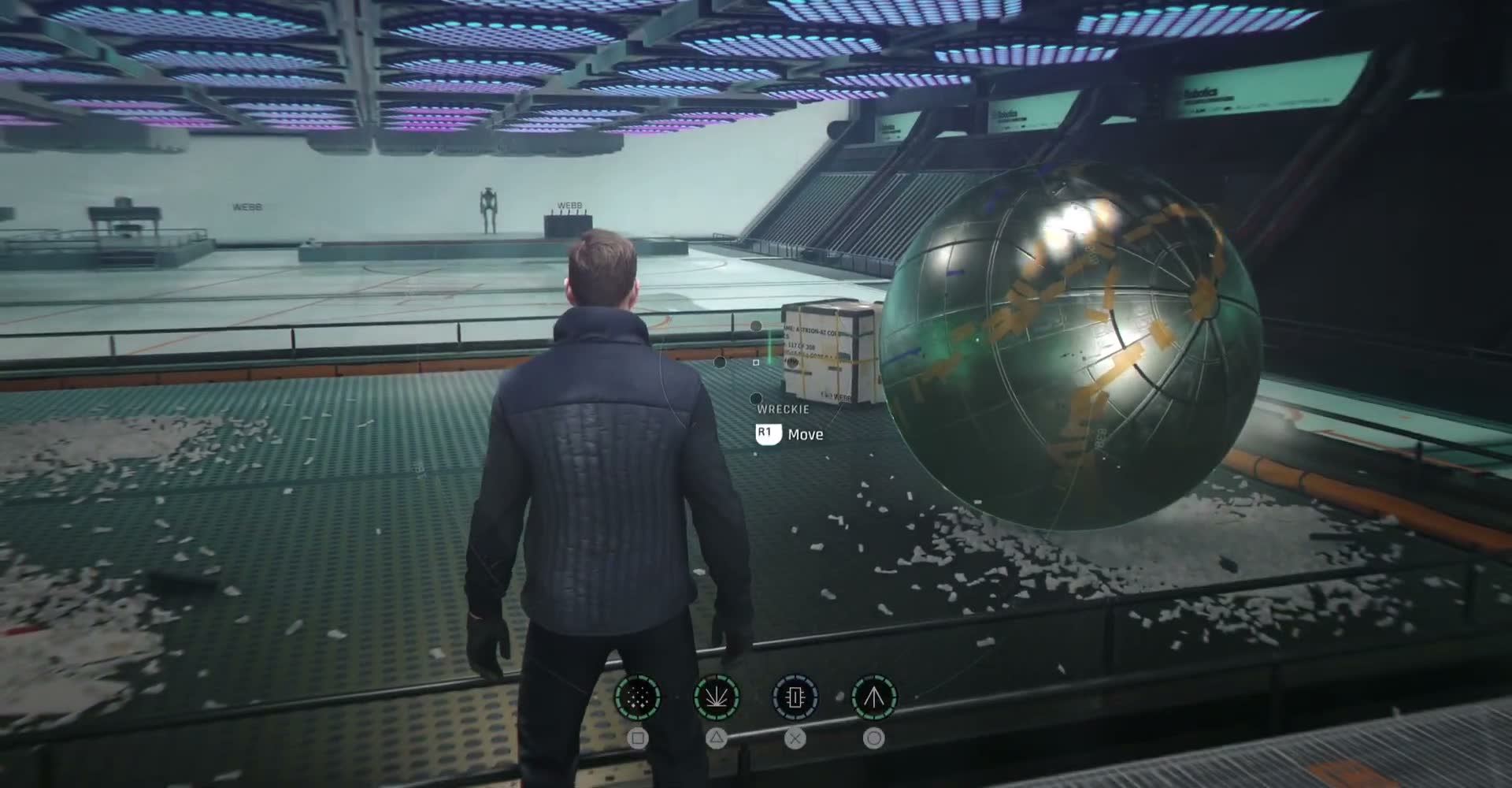
You enter a large space dominated by a massive, perfectly reflective metallic sphere — the same art installation/equipment you saw suspended above the party from the observation deck. Up close it is even more impressive: a flawless mirror-finish orb reflecting the entire room.
This space has high ceilings, glass flooring/walkways in sections, and multiple levels. Guards patrol here.
Luxury Quarters — The Piano Room
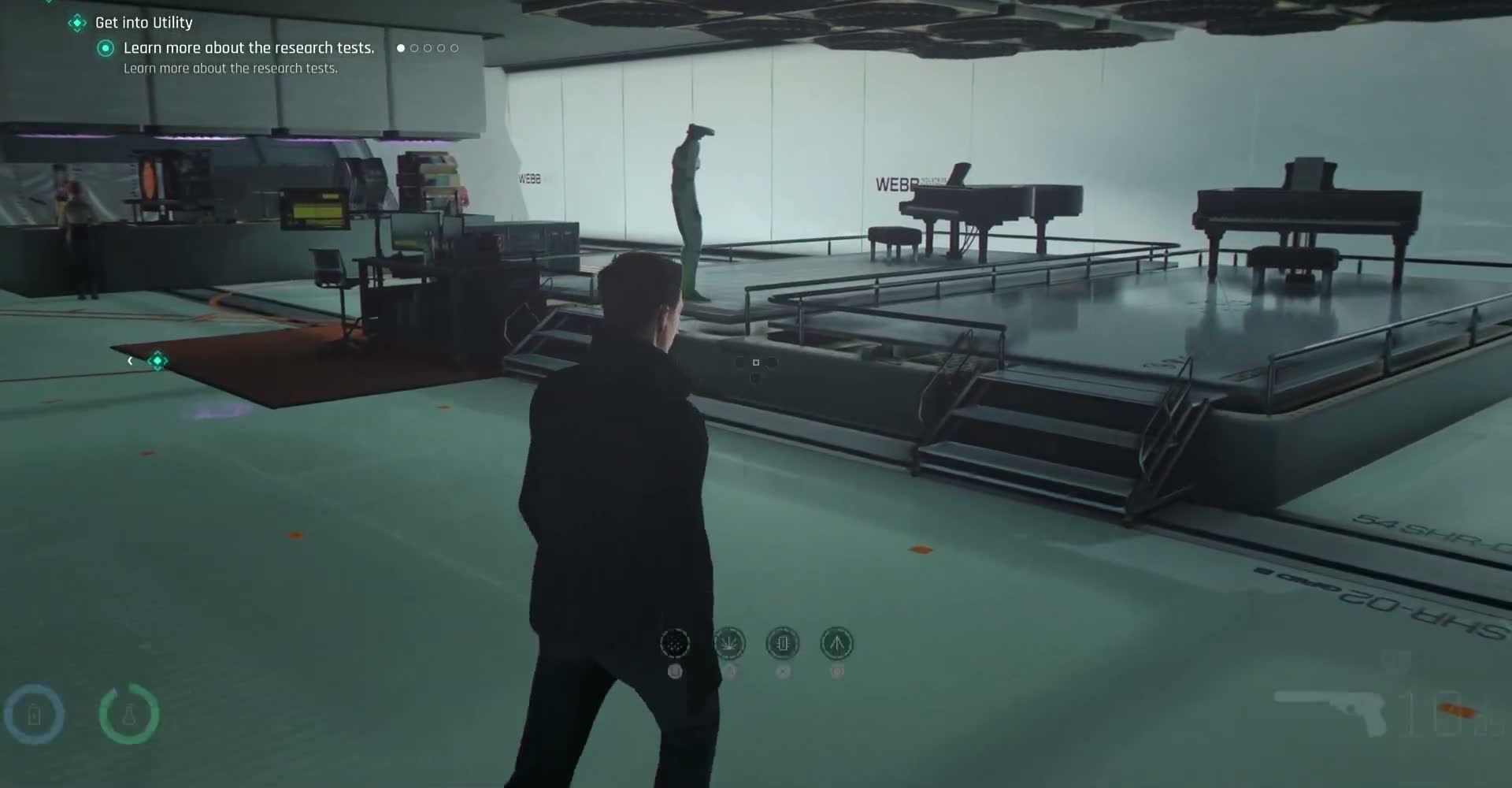
Cutting through a side area you pass through a room that belongs in a penthouse apartment: dark polished floors, a grand piano, scattered modern furniture, a red rug on a raised section. Lighting is warm and domestic.
It is a striking, almost surreal space to find in this context, reinforcing that the people who run this facility live here — and live very well.
The Lab Technician
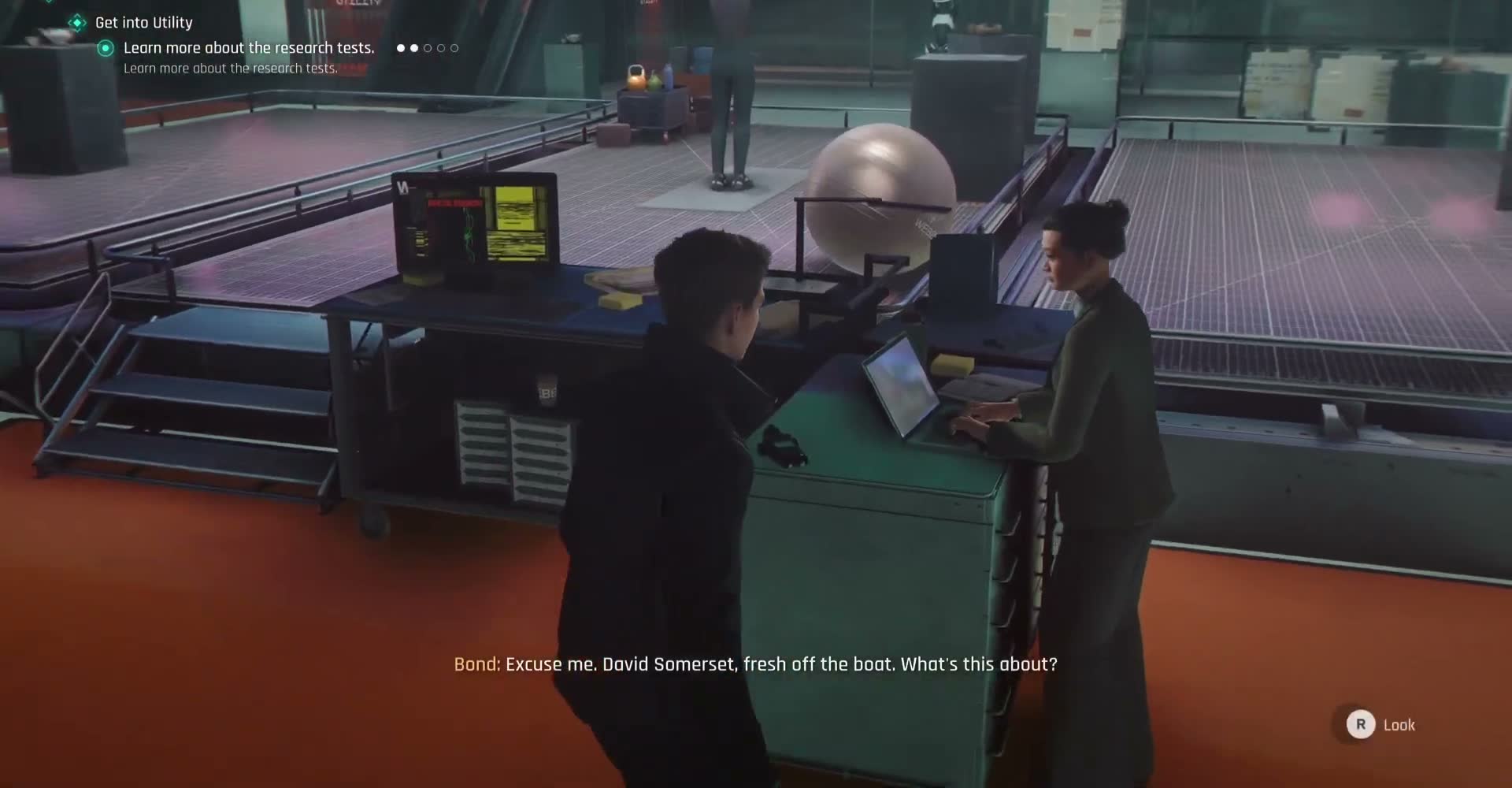
In a control room or lab with green-lit console surfaces, you encounter a woman in dark clothing who appears to be a scientist or senior technician. Unlike guards, she does not immediately attack or call for help — her reaction is more complicated.
This is a character interaction, not a fight. Approach with weapon holstered if possible.
The Lab Director
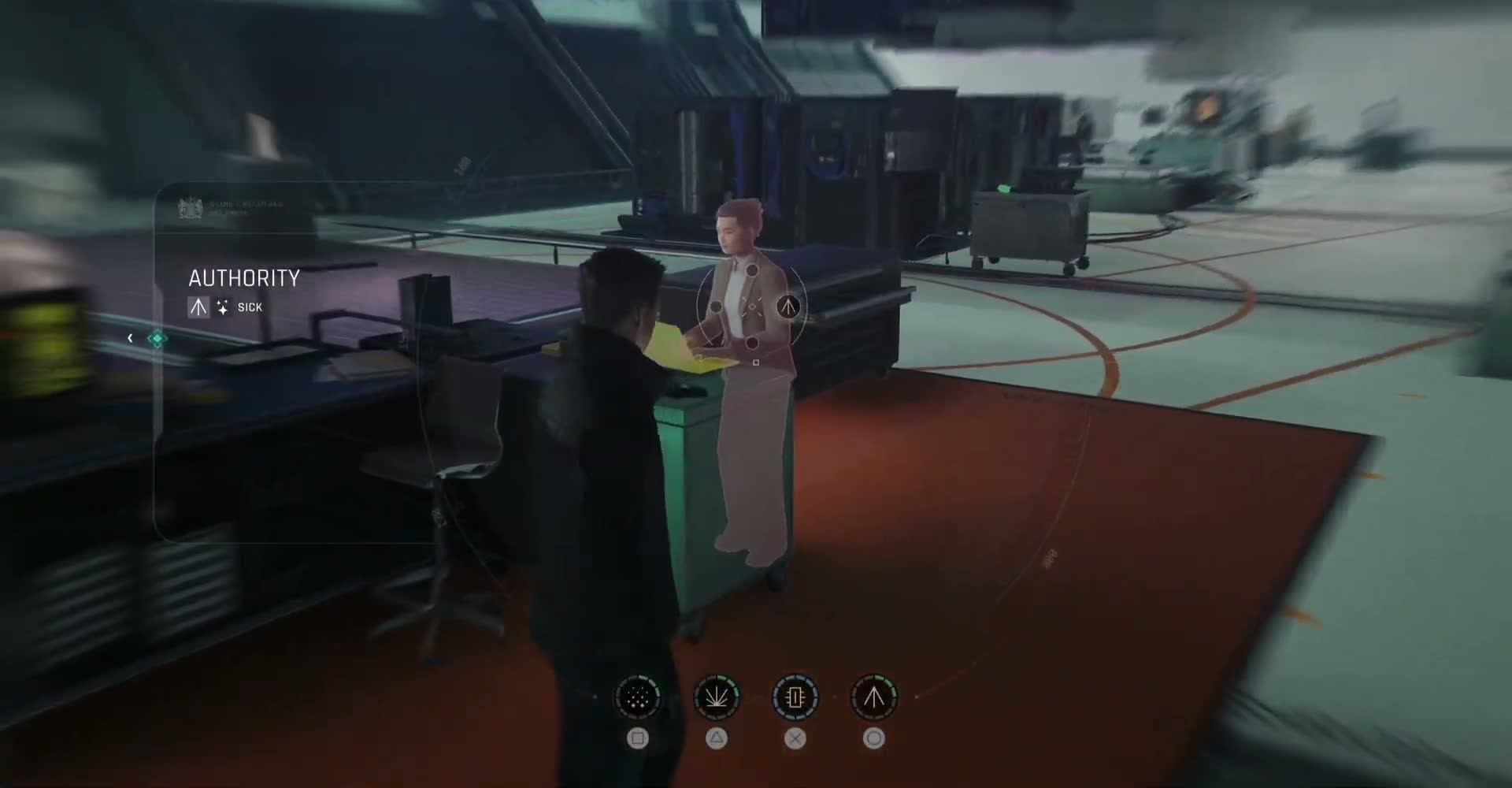
In a glass-walled office/lab filled with holographic displays and high-tech equipment, you come face-to-face with a man in a dark shirt wearing glasses — someone who clearly runs the technical side of this operation. He stands by a console with a monitor displaying yellow/amber schematics.
The conversation that follows is loaded with information. This is where the chapter's title 'Wave of the Future' starts to make concrete sense.
Working Through the Labs
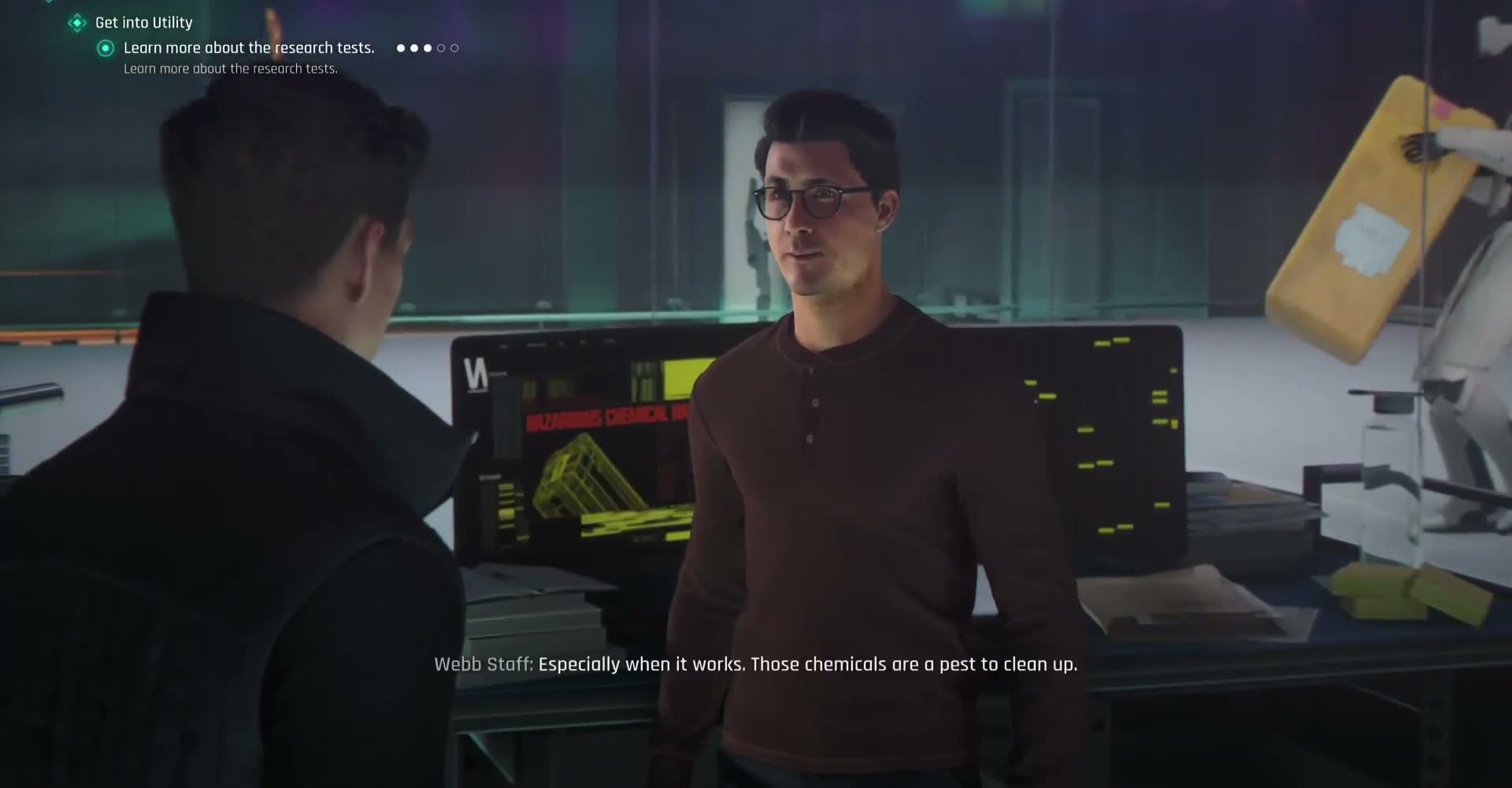
Past the director's office you move through working areas: labs, equipment rooms, server spaces. Architecture is modern and cold — glass walls, clean lines, blue-white overhead lighting that makes everything feel clinical.
Security is heavier but guards are technicians/security rather than elite troops, and their patrol patterns are predictable if you watch them.
Glass Walkways
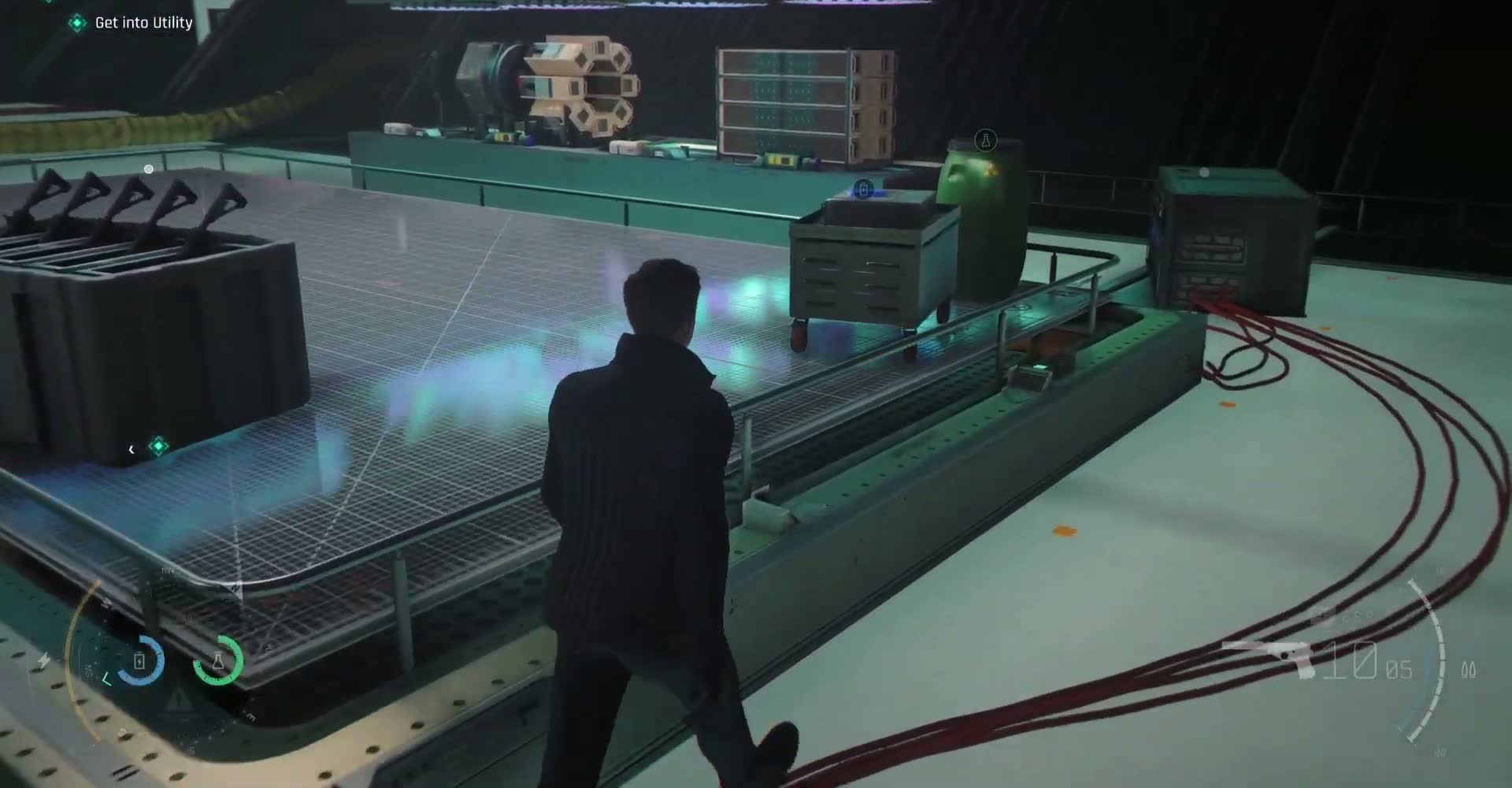
A striking section has you crossing a room on glass flooring/transparent walkways that let you see down into a lower level of cables and equipment. The effect is vertiginous, especially in combat.
Circular patterns on the floor echo the design language of the robot's chamber.
Combat Erupts
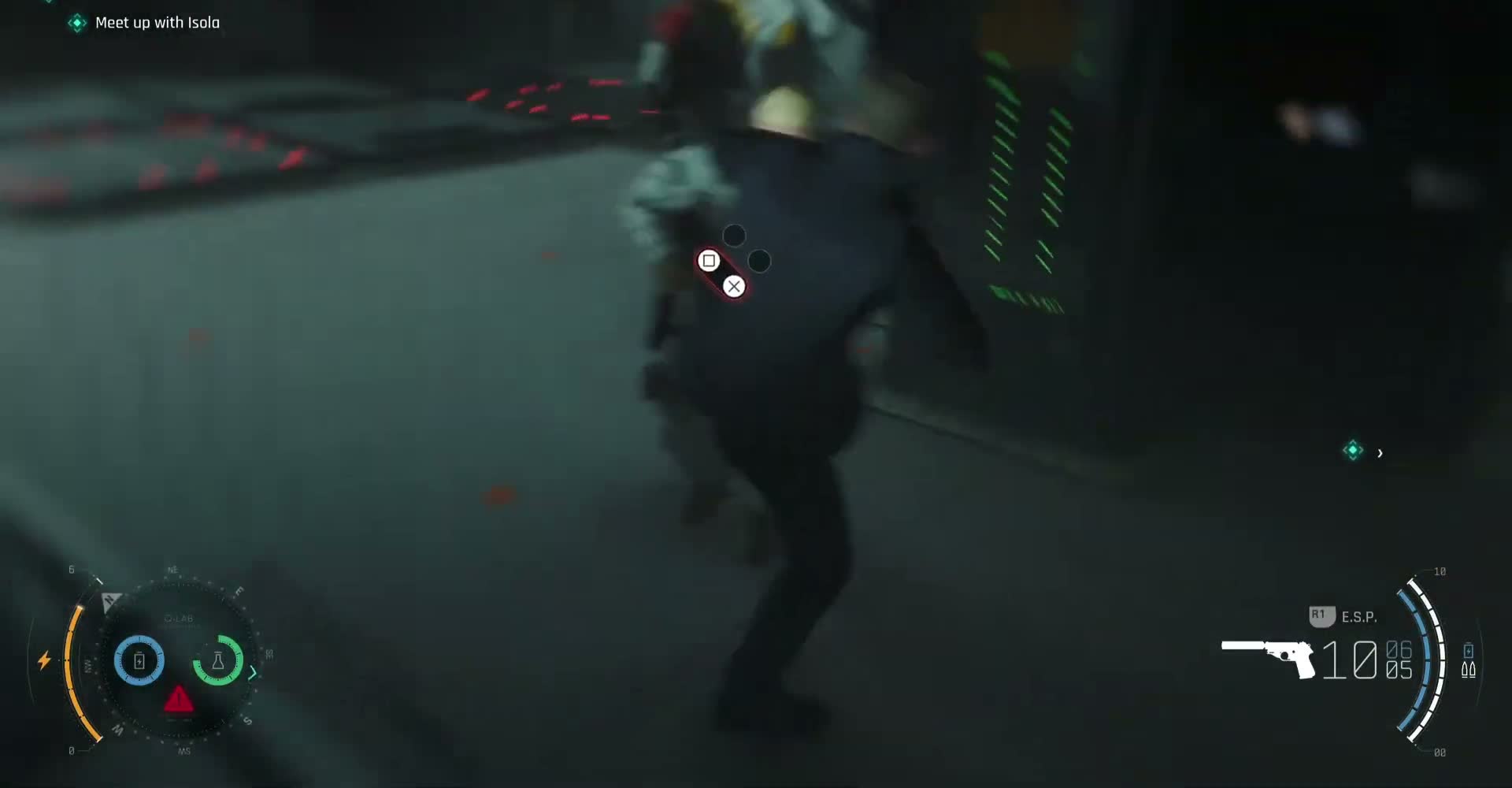
At some point stealth becomes impossible or the story forces a confrontation, and you end up in a fast-moving close-quarters fight in a corridor or equipment room. Guards in dark tactical gear engage you at close range.
Movement blur, muzzle flashes, and tight angles make this fight chaotic. Move, use cover, and make every shot count — ammo is precious.
Smoke-Filled Corridor
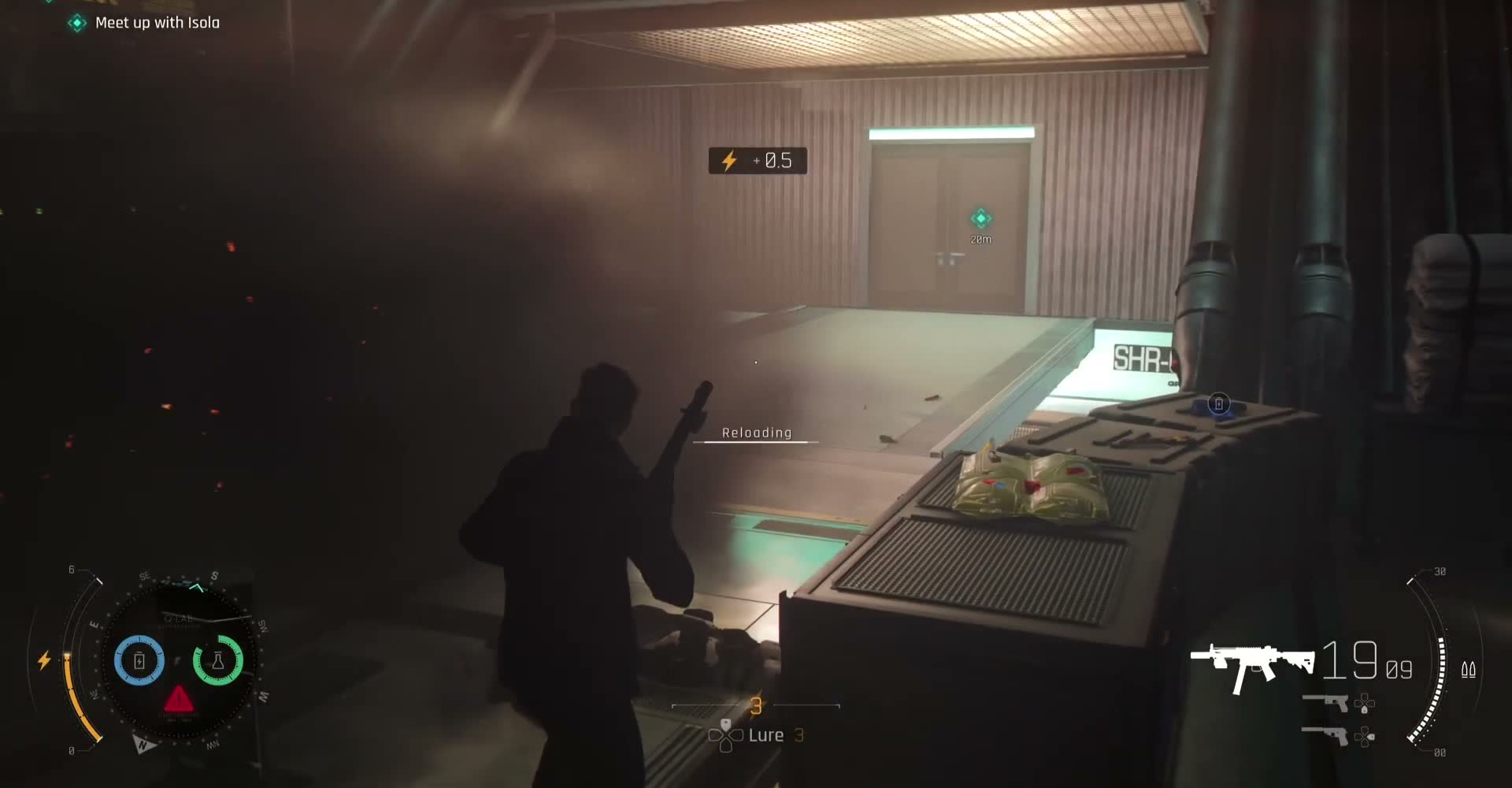
After the fight (or as part of it), you push through an area filling with smoke/haze — from a discharged fire-suppression system, weapons fire, or something deliberately released as a security measure. Visibility drops sharply.
In the haze you see silhouettes of figures moving. The scene is disorienting and tense.
Heavy Firefight
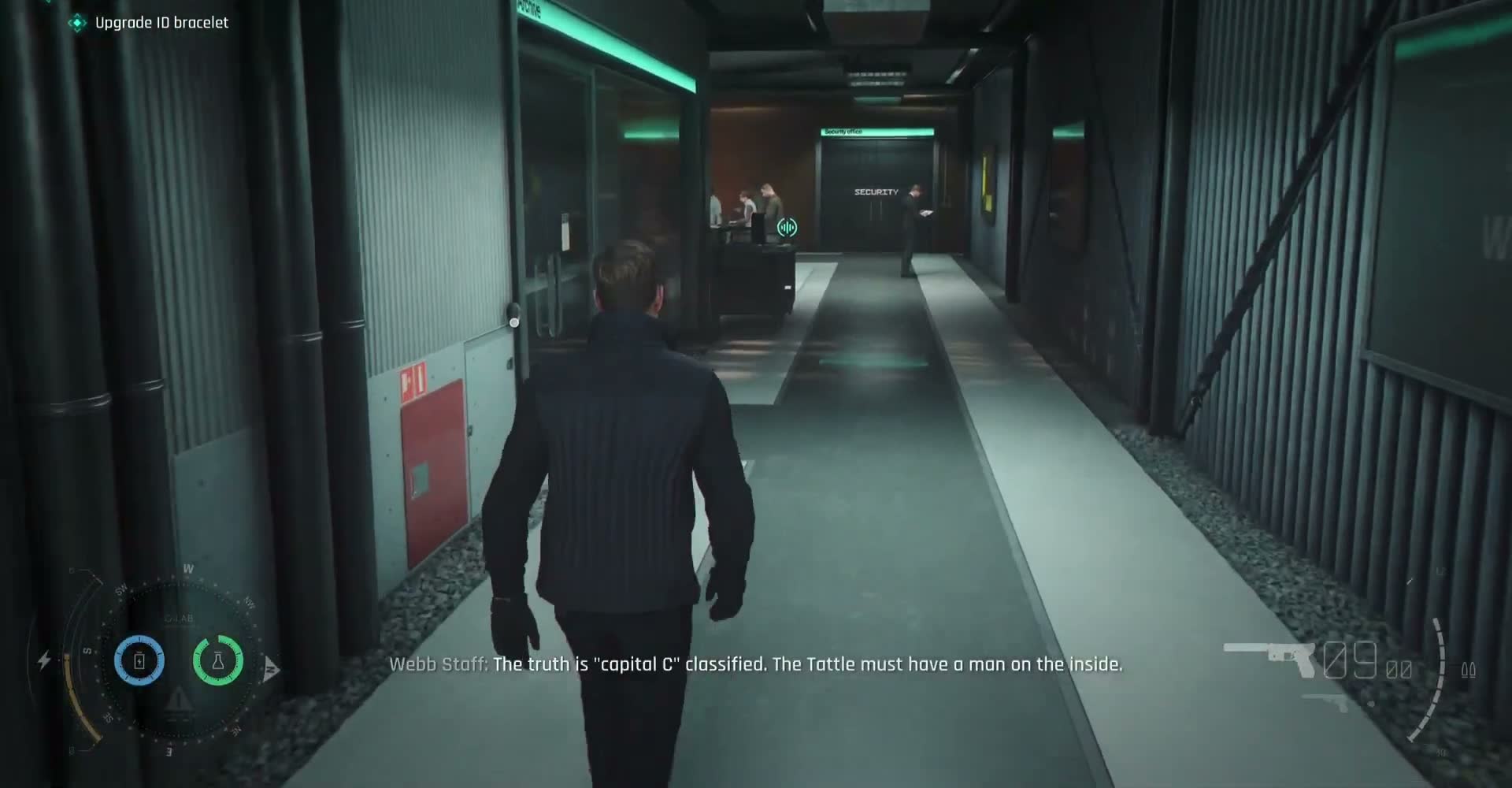
A major sustained firefight hits in a corridor or equipment bay with multiple enemies. This is one of the hardest combat sections because you are engaged from multiple angles in a space without abundant cover.
The weapons chatter and urgent music tell you this is the facility's real security response, not the patrols you have been picking off.
Face to Face
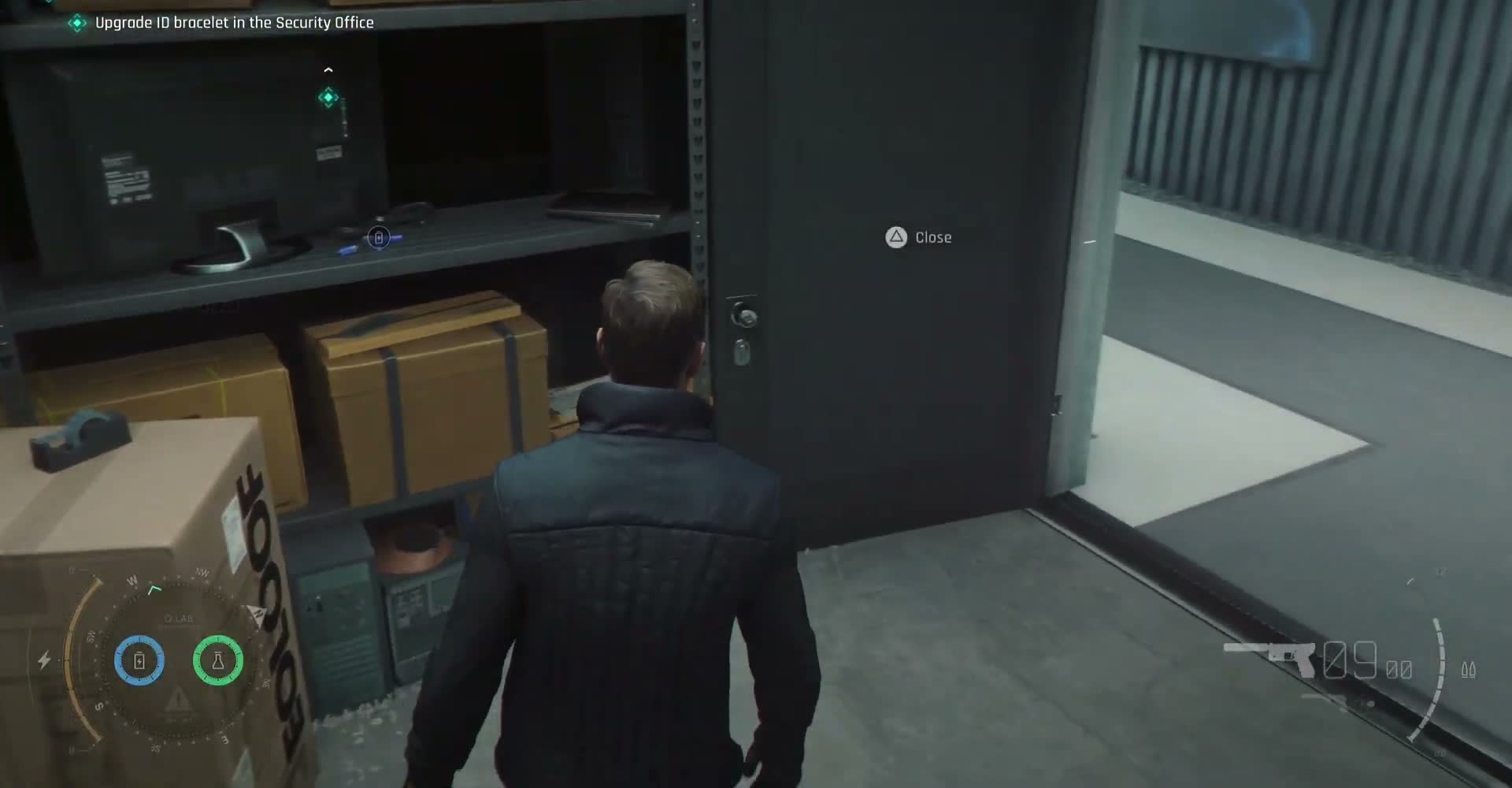
The firefight noise fades into a story moment. Bond is face-to-face with someone — the camera tightens to a close-up on his face, expression hard, eyes focused. You can feel the weight of everything he has seen settling on him.
A breath-catching beat between action sequences — a reminder of stakes before the final push.
Dark Descent
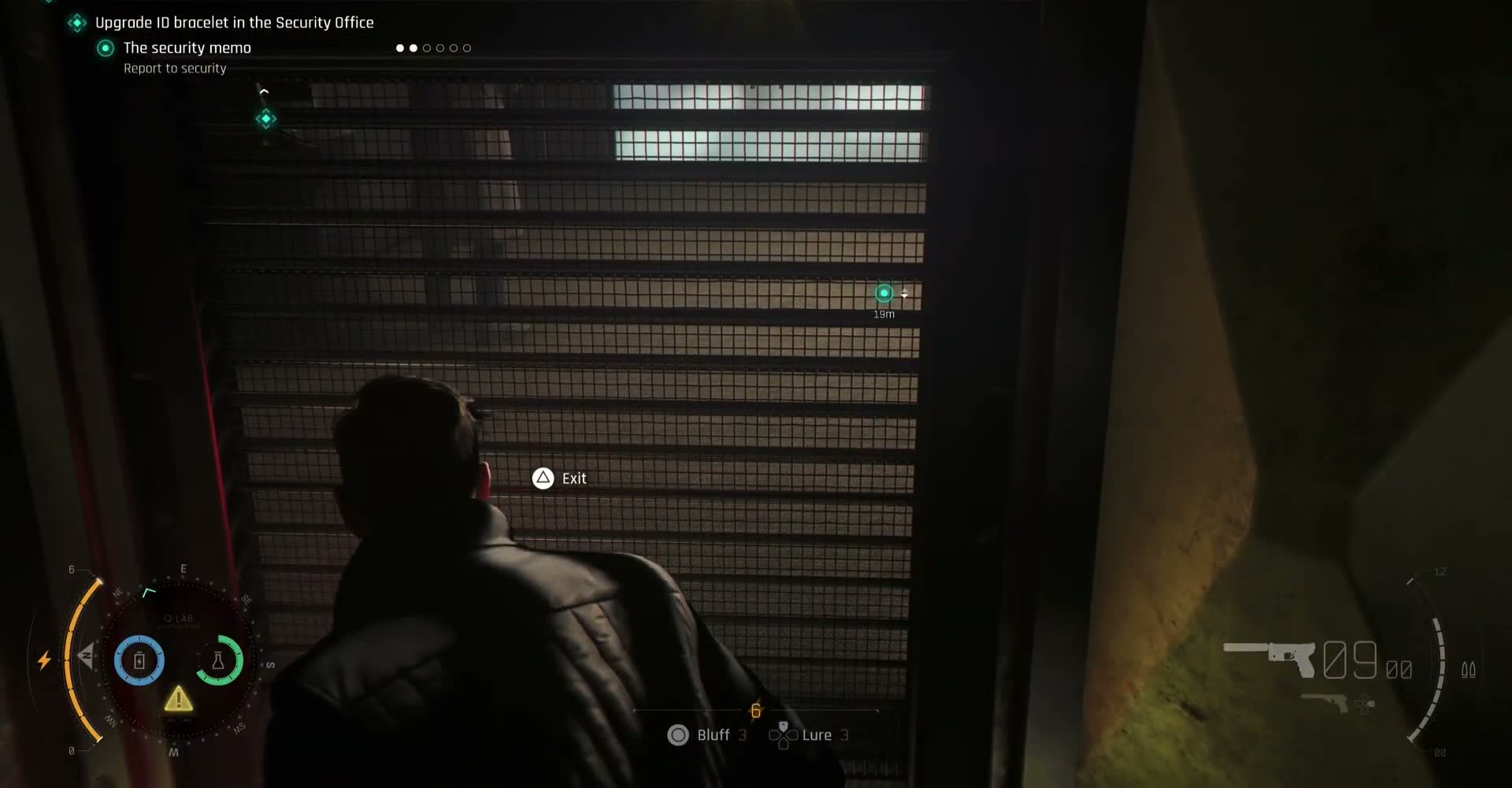
Deeper into the facility. Lighting drops, spaces get more utilitarian, walls closer together. You are in the guts now — maintenance tunnels, pipe runs, concrete walls. The polished luxury of the atrium is far behind.
This is the dark-stealth section: sparse lights, deep shadows, reliance on sound and patience more than visuals.
Through the Blinds
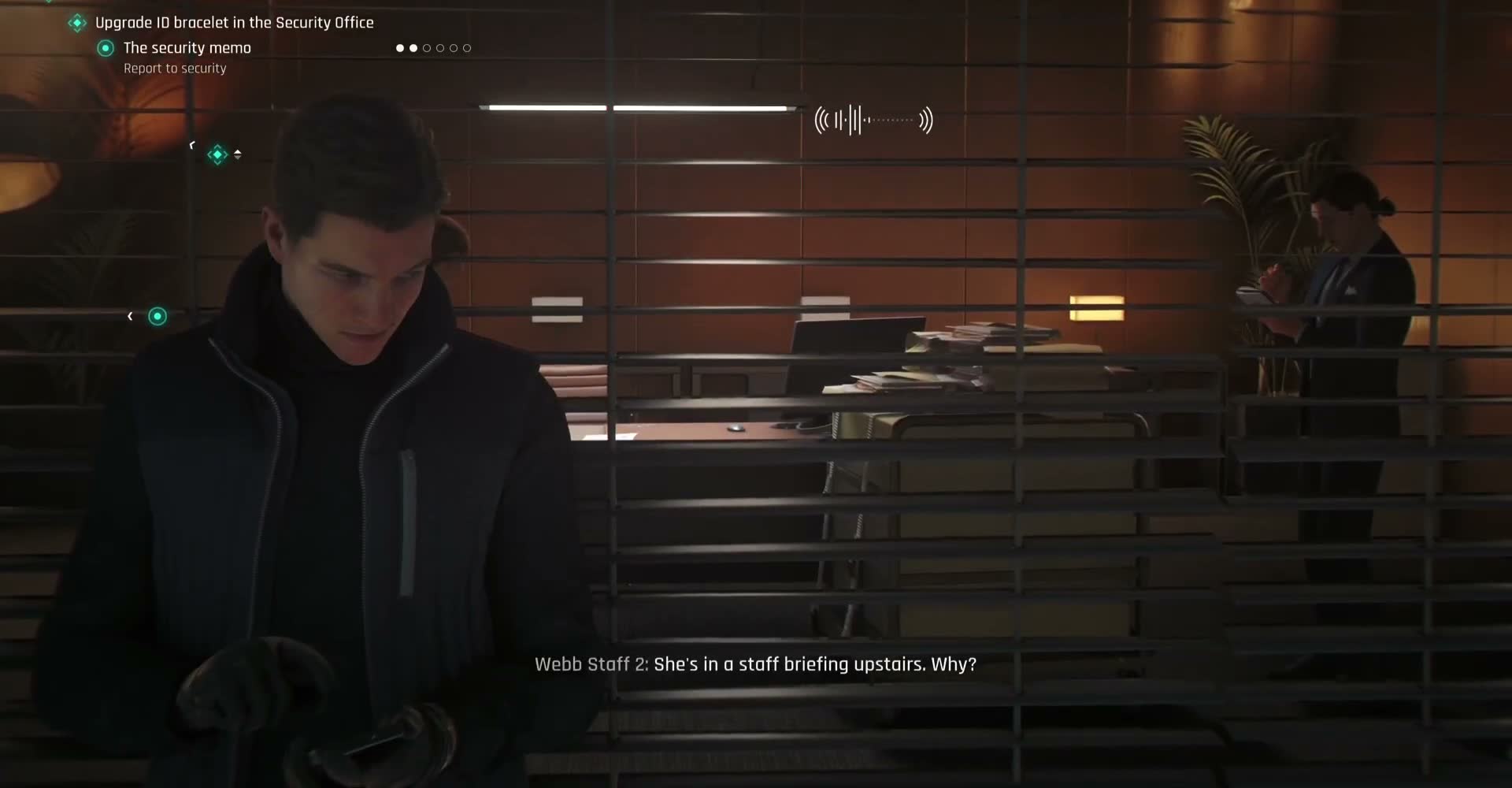
At one point you look out into a corridor/room through horizontal blinds — that classic cinematic voyeur shot. You can see figures and movement through the slats without being clearly seen yourself.
It is a cool visual moment and a reminder of the game's spy-movie aesthetic even in the facility depths.
Hacking the Terminal
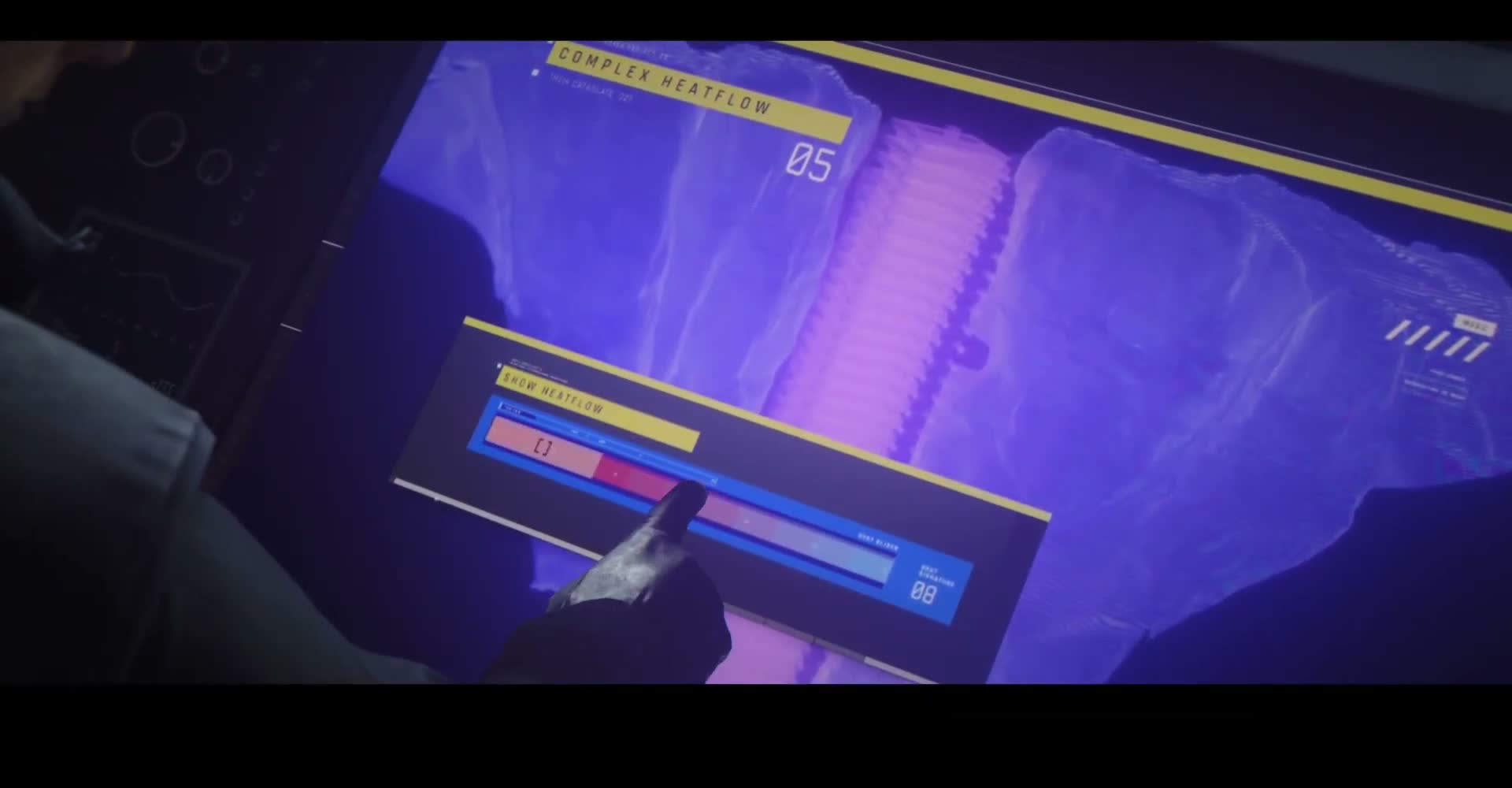
A key hacking interaction: a close-up of Bond's hand on a glass touchscreen glowing purple and blue, fingers manipulating holographic data. This is not a mini-game; it is a story beat and visual flourish showing the technology this facility runs on.
Whatever he accesses opens the next path forward or reveals critical information.
Server Farm
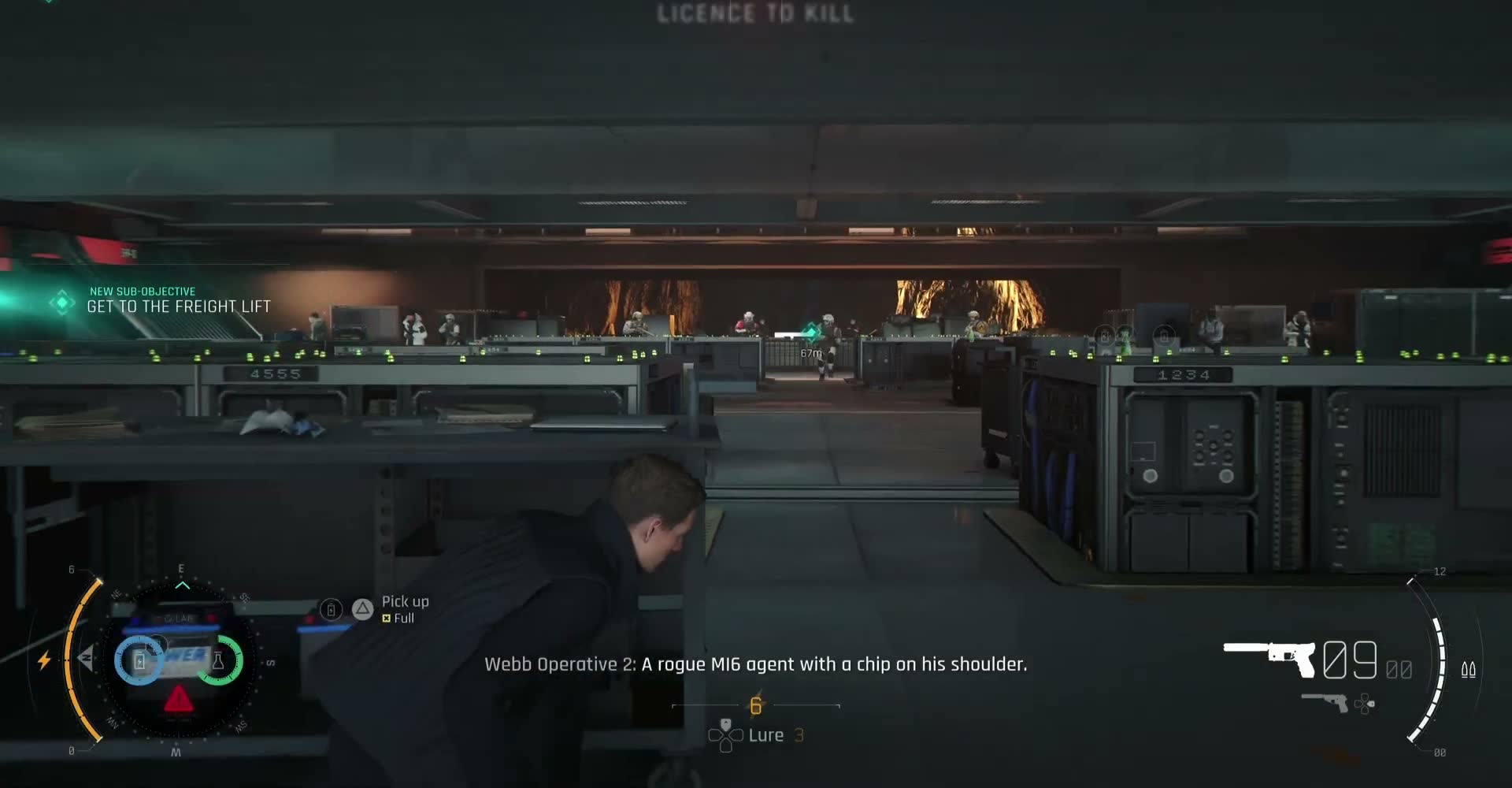
The route opens into a large equipment room filled with server racks, stacked hardware, and blue-tinted overhead lighting. The hum of thousands of cooling fans is almost palpable — a server farm or data-processing centre.
Guards patrol walkways between racks. Equipment provides both cover and visual obstruction.
Control Centre
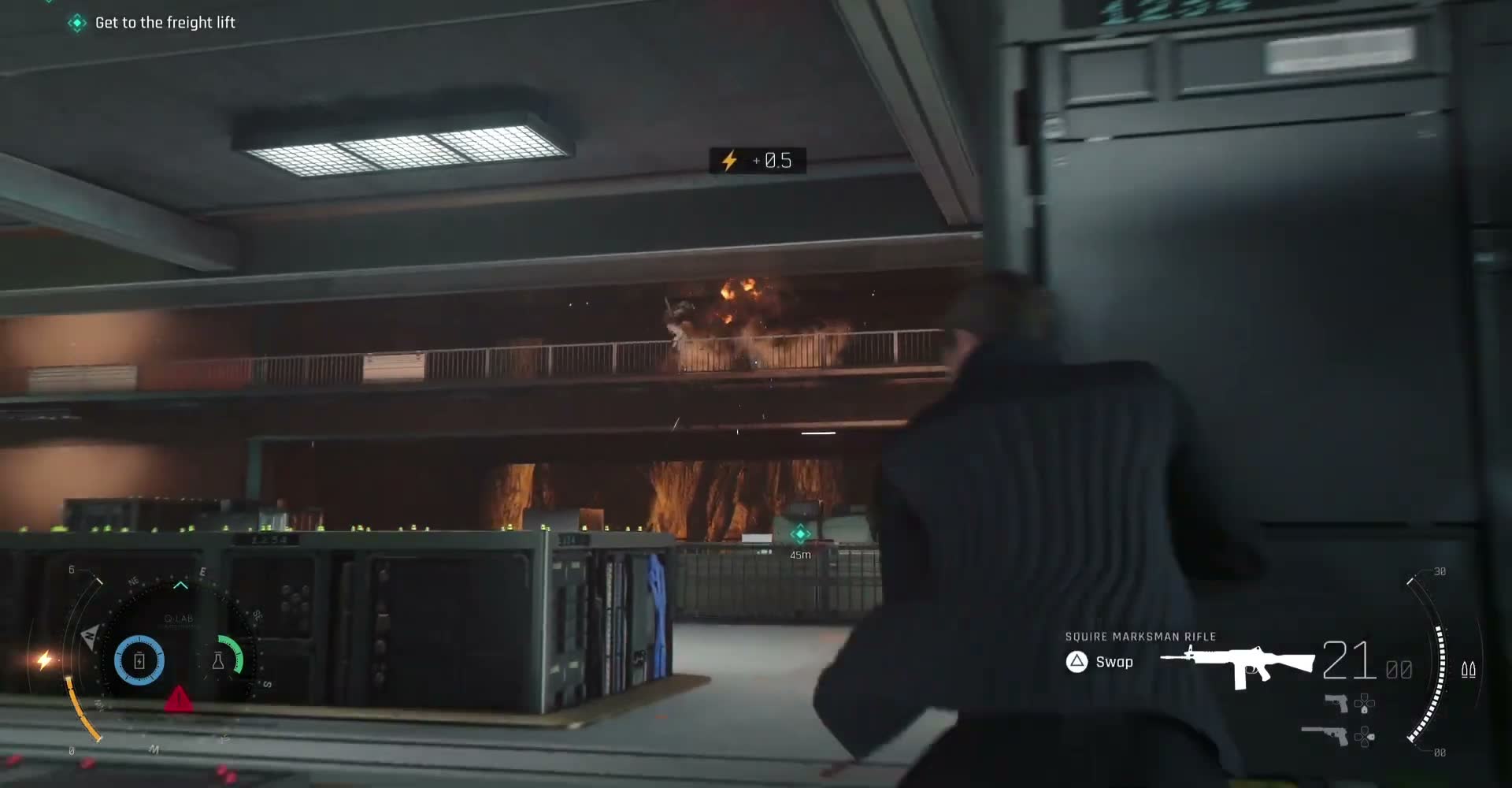
A black leather office chair sits in front of a wall of monitors in what appears to be a control room or executive office. The chair is empty, but screens are lit with scrolling data. Whoever was sitting here left in a hurry — or is watching you from nearby.
Red-Lit Depths
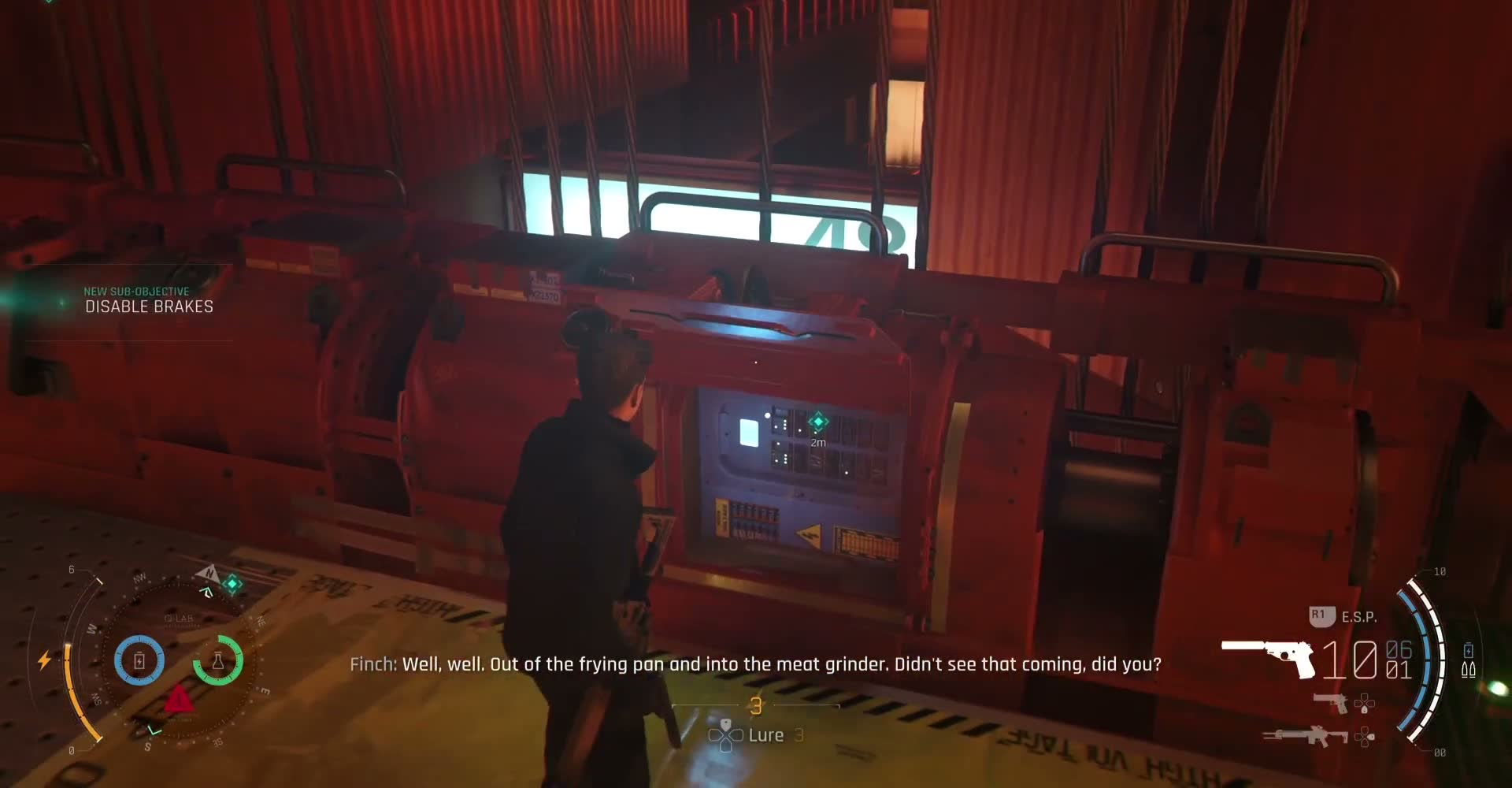
The deepest section is lit by harsh red light and illuminated machinery signage. It looks less like a research facility and more like an engine room or industrial plant — darker walls, larger and louder machinery.
You are getting close to whatever this facility's central secret is.
Confrontation in Red
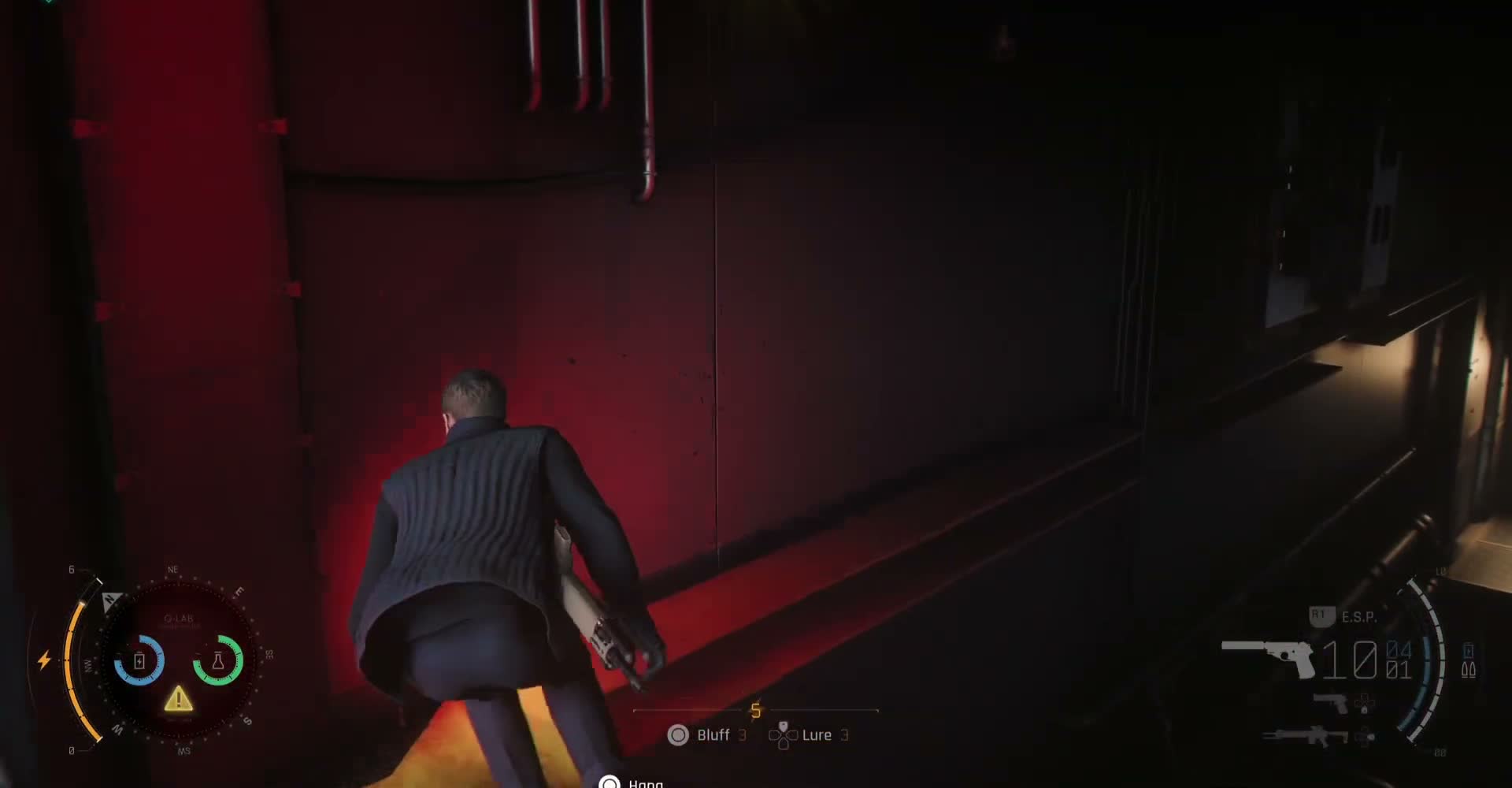
In a red-lit room filled with pipes, conduit, and heavy machinery, Bond finds something — a panel, a device, or a person — that is clearly significant. His body language is urgent, moving toward something with purpose, coat pulled back, ready.
This is the climax building. Music, lighting, and pacing all tell you that you are minutes from the end.
Fighting Out
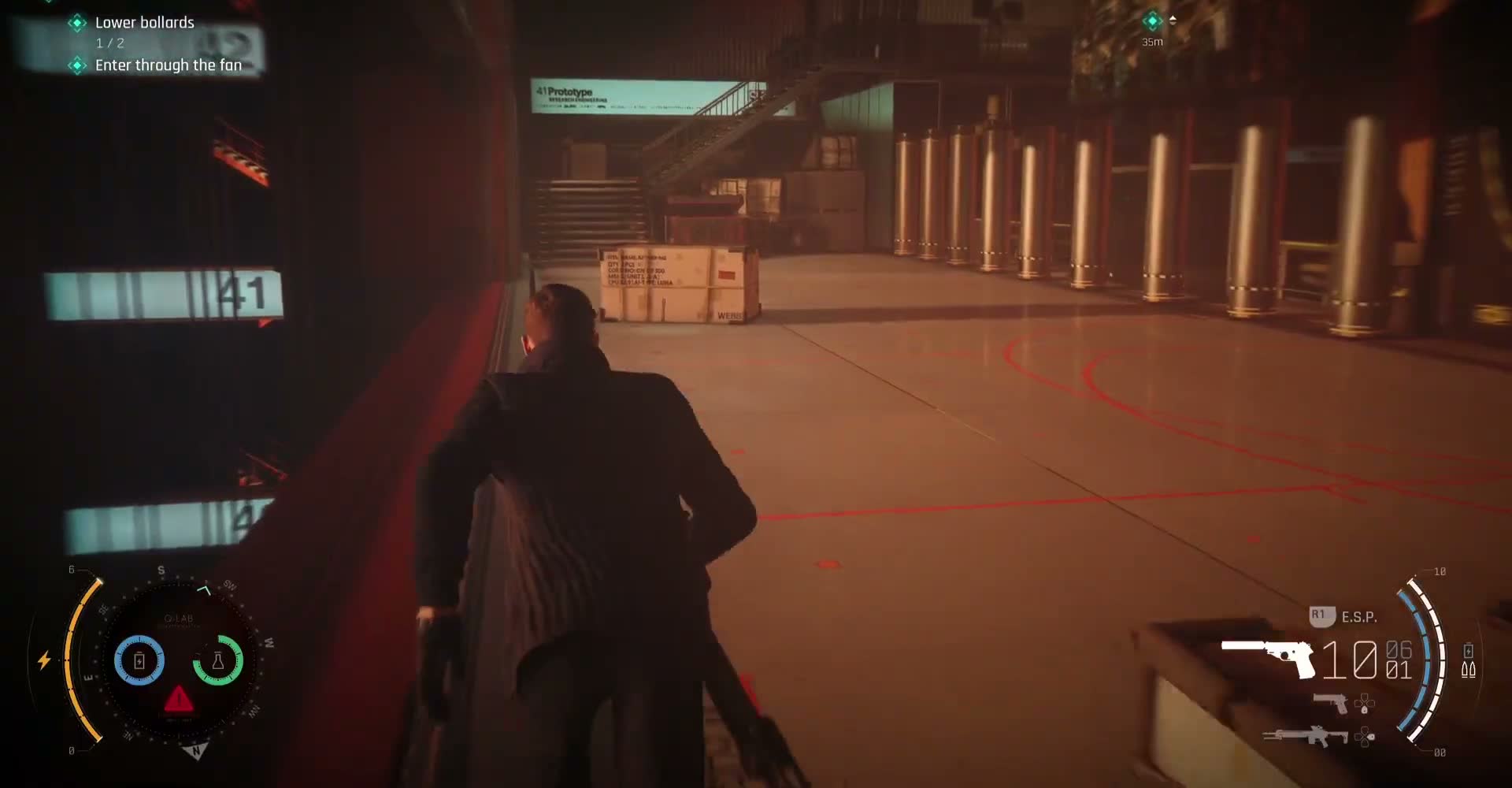
Whatever happens in that red room triggers a desperate running fight as Bond fights his way back out through alerted guards in warm amber-lit corridors. The fight is chaotic and close-quarters. You are not methodically clearing rooms anymore — you are escaping.
The Core Chamber
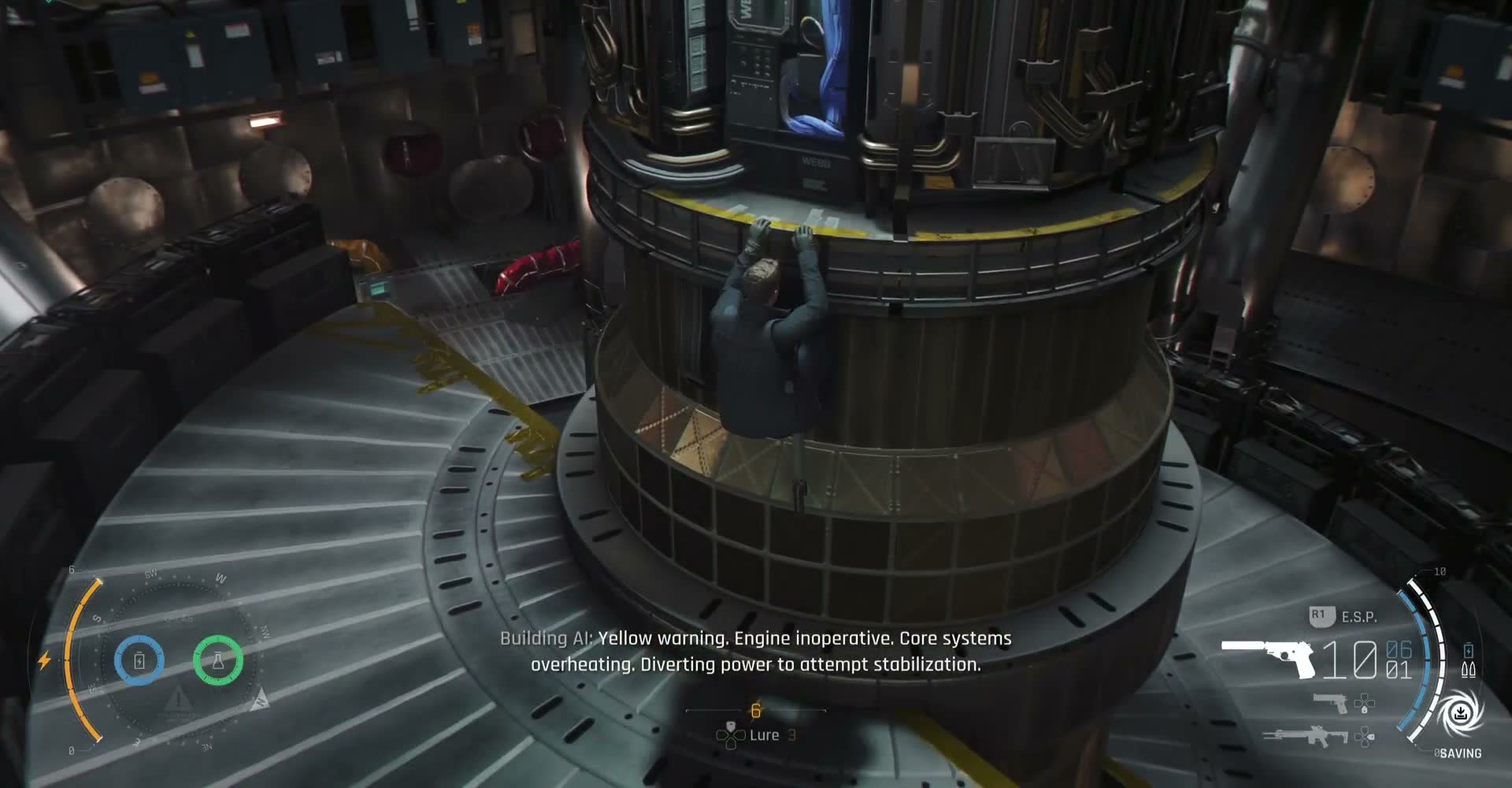
You emerge into a vast circular chamber that feels like the heart of the entire facility — a multi-level atrium with concentric walkways surrounding a central structure resembling a reactor core or massive experimental machinery. Architecture is gothic-industrial: metal grates, railings, multiple levels overlooking a central drop.
This space is visually stunning and clearly represents the 'Wave of the Future' technology the chapter is named for.
Service Tunnels
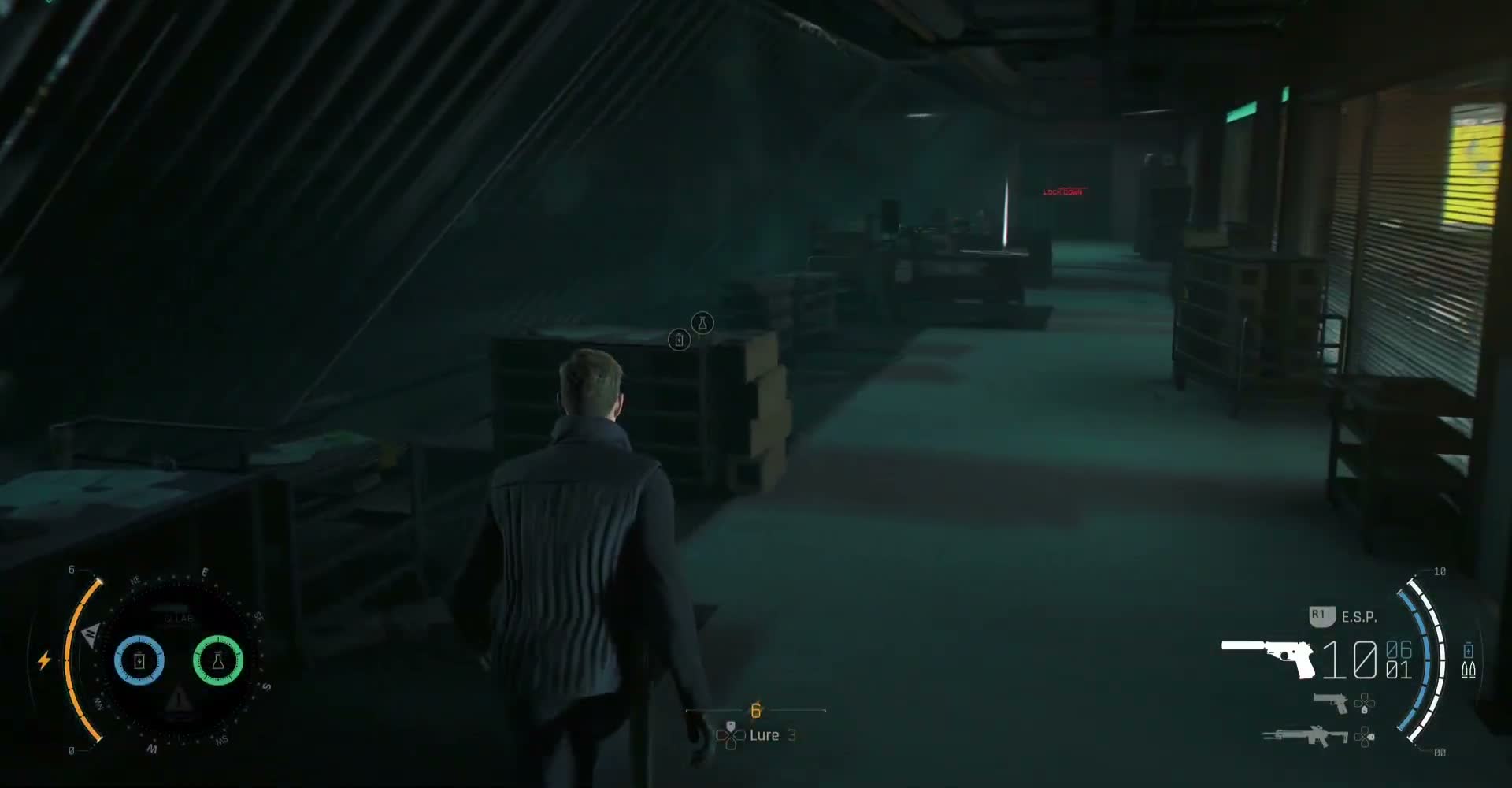
The route out of the core takes you through dim green-tinged service tunnels — the back-of-house arteries that keep the facility running. These feel older than the polished labs above, like older infrastructure the fancy parts were built on top of.
Fewer guards here — everyone who can fight has been pulled to respond to whatever you triggered in the core.
Webb
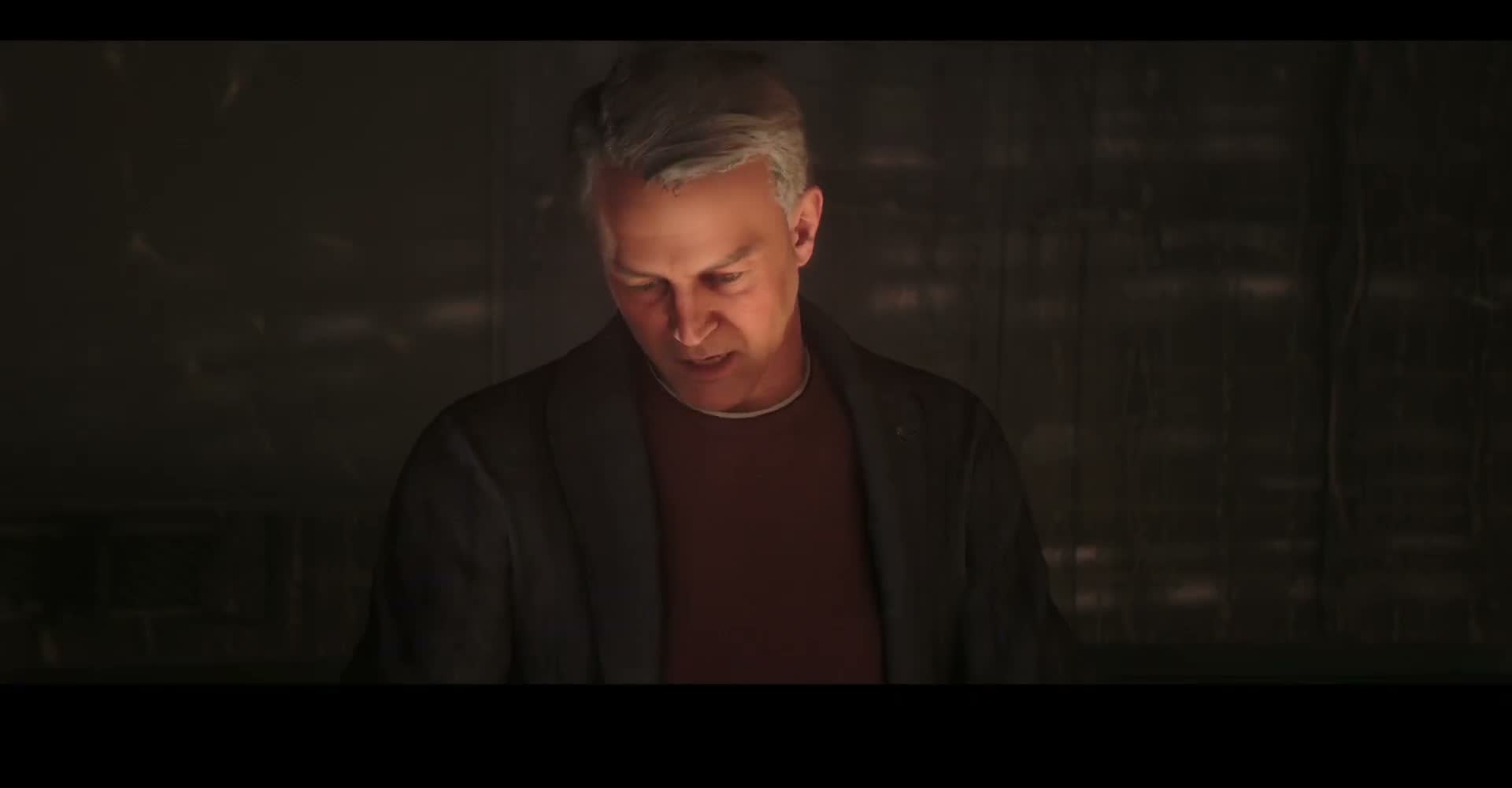
Before you can fully escape, you come face-to-face with the man behind it all: an older man with silver-grey hair, wearing a dark jacket over a dark red shirt, in a room with a rough brick/stone wall that feels older and more traditional than the rest of the facility.
This is the architect of this place. The conversation that follows is the chapter's narrative climax. His expression is hard, disappointed, angry — but also knowing, like he has been expecting this conversation for a long time.
Boat Chase — Glacial Waters
The chapter's climax is not a gunfight. It is a boat.
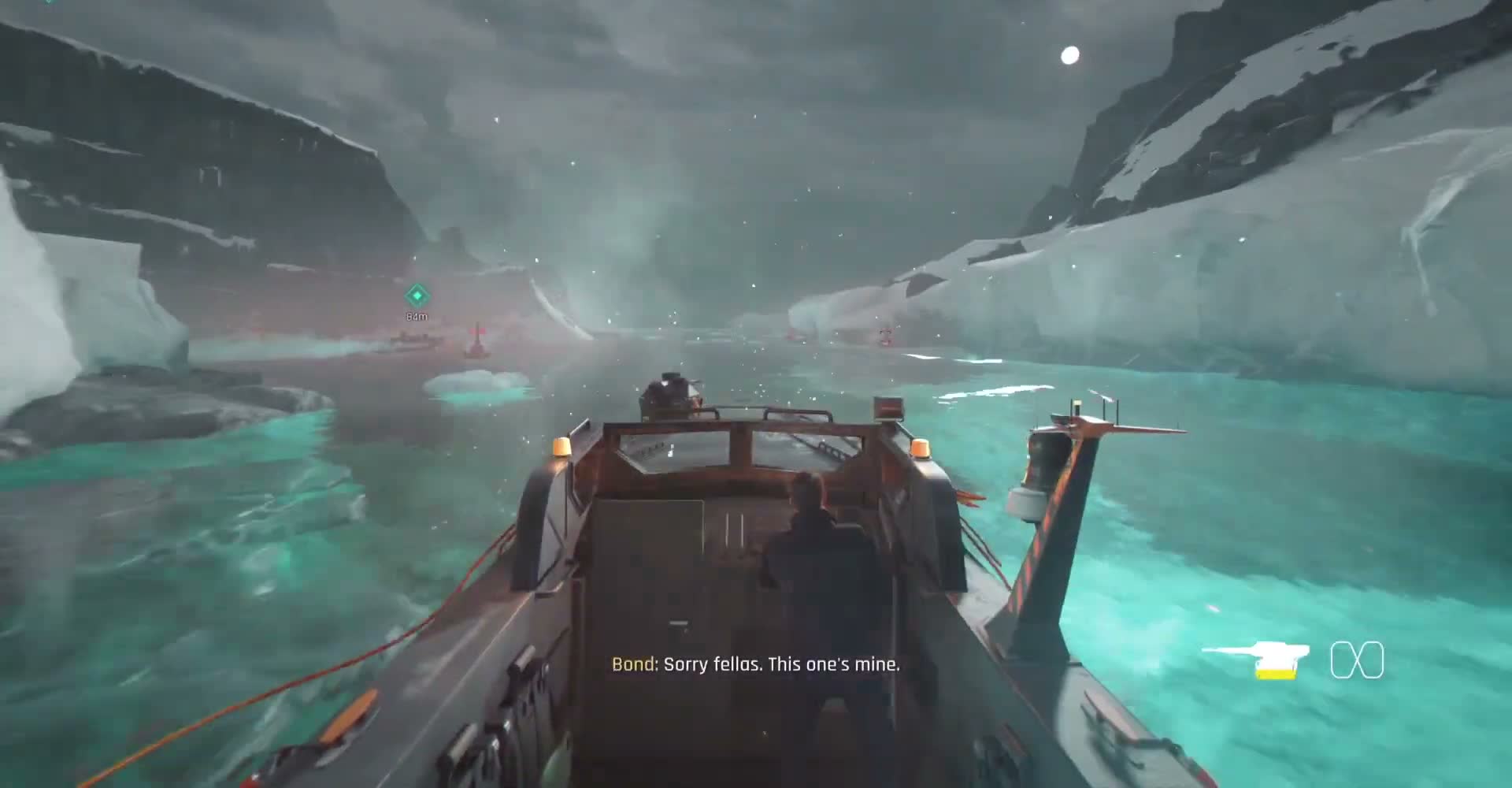
After the confrontation, you are suddenly on the water — not the warm sunset sea of the opening, but green-blue ice-cold water of the Antarctic coast. A small RIB idles by a dock or ice edge and you need to get on it and go. Sky overcast, ice floes drifting, snow on the rocks.
Bond is at the wheel, bow pointed into a channel between glacial rock faces. Urgency is palpable — you can almost hear facility alarms behind you even outside.
Heading Out
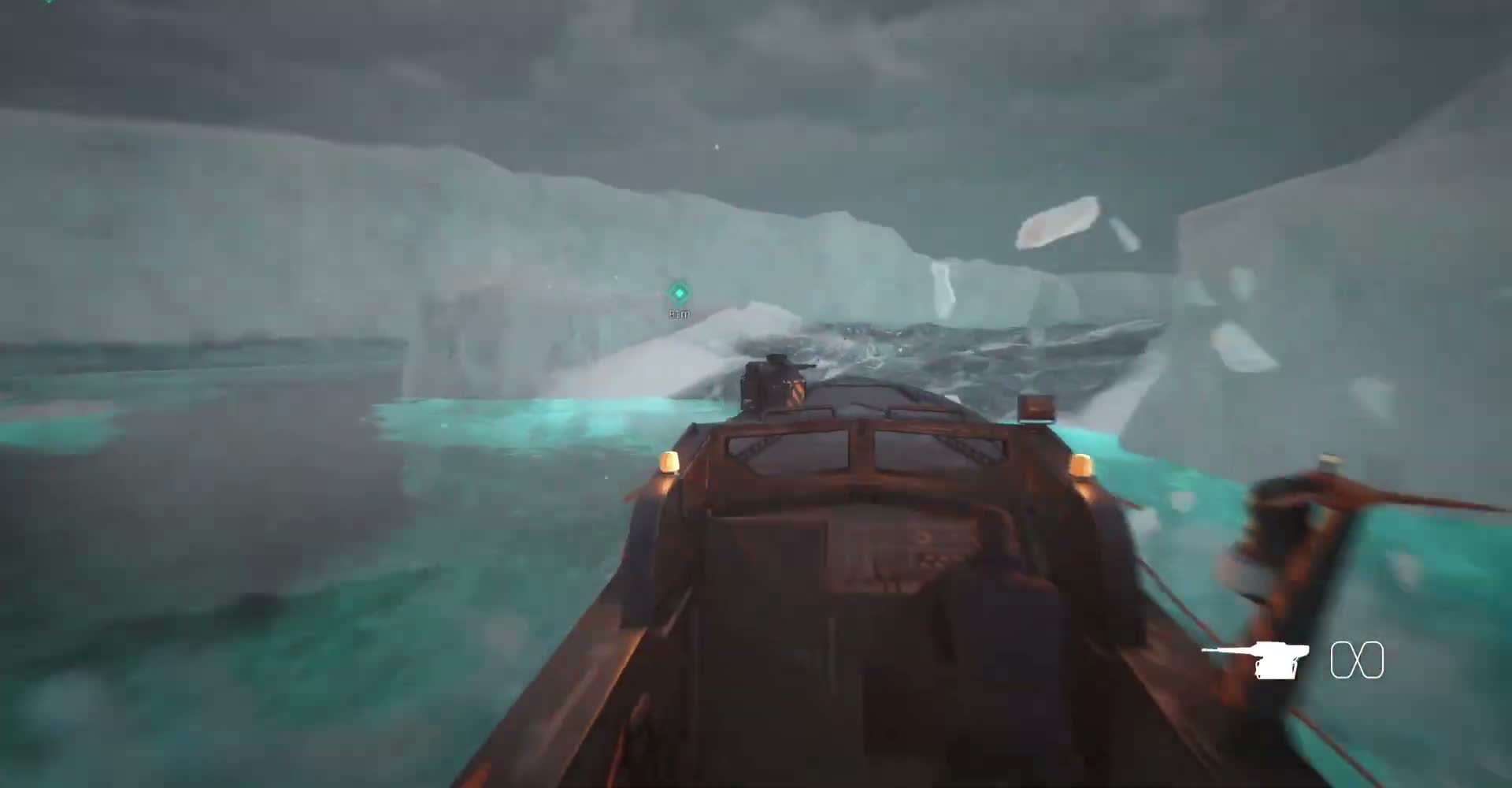
The boat accelerates away from the facility, bouncing over cold waves. The camera pulls back, giving a wider view of churning water and the icy coastline receding behind you.
There may be pursuit. I will not spoil whether there is or is not, but you should be ready for anything at the wheel. The chapter is not quite over.
End of the Chapter — Standoff on the Ice
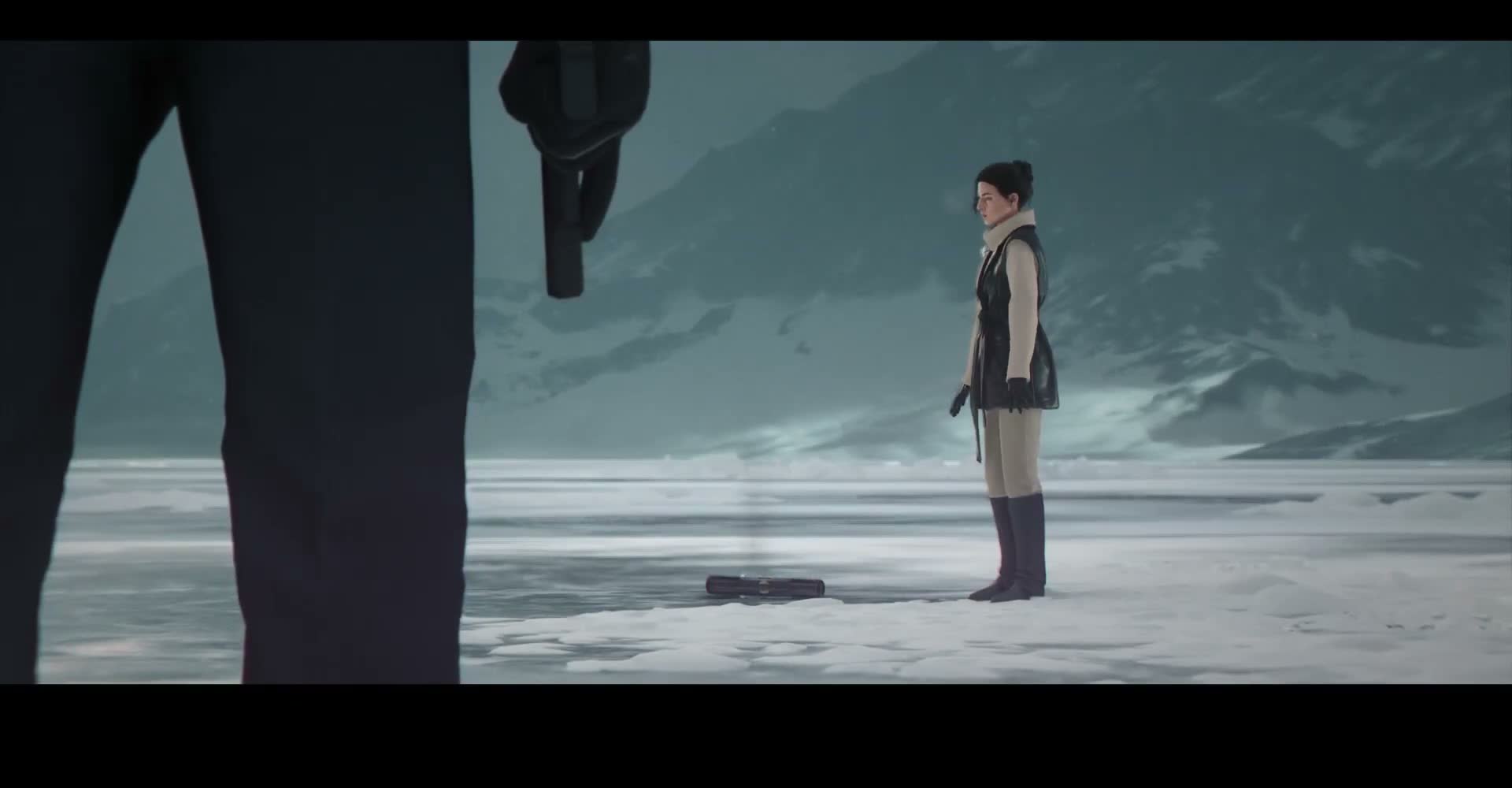
The chapter does not end on the boat. It ends on snow.
In a final, quiet beat after the escape chaos, Bond stands on a snow-covered surface — ice or frozen ground — holding his pistol in a two-handed grip, aimed steadily at a figure in dark winter clothing standing a short distance away. The framing holds for several long seconds.
Two figures. One gun. Snow underfoot. The future uncertain. The chapter title card appears, your stats and rating show. The story cuts directly into the final chapter: For England.
Chapter Tips
Collectibles in This Chapter
Explore each section thoroughly to find all hidden items. Check the tips above for specific collectible locations.